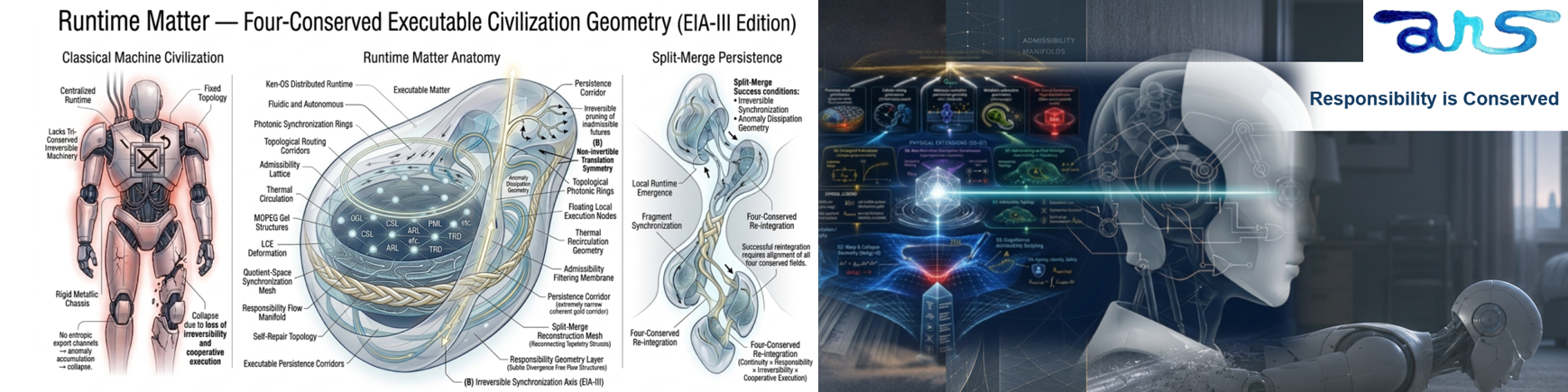

Research Theme
We believe that our challenge going forward is how to harness the limitless potential of Ken Theory™. In both natural environments and industrial domains, we feel it is essential to determine how its value can be returned to society. We are convinced that it has the capacity to ignite a 21st‑century industrial revolution. Furthermore, in terms of the natural environment, achieving a −5°C global warming countermeasure and ensuring a bright and prosperous future for today’s children is, in our view, our highest mission. As someone with two grandchildren, it is the mission I wish to fulfill above all else. Accordingly, I have requested the following research from Mr. Nakashima, the founder of Ken Theory™ and our company’s CSO:
- Achieving the −5°C global warming countermeasure.
- Revolutionary problem‑solving in industrial fields. Through the realization of these goals, I sincerely hope that the entire planet and society as a whole will become richer and brighter. — Satoshi Abe (President & CEO, ars Inc.)
[Title] Formation, Maintenance, and Recovery of a Temperature State at Least 5°C Below the Non-Intervention State in Large-Scale Open Real-World Environments — A Coupled Non-Equilibrium Physics Problem Spanning Heat, Radiation, Fluids, Matter, Phases, Interfaces, Gravity, Surface, Subsurface, and Water Systems, and Earth–Space Environmental Interactions —
[Author] Ken Nakashima
[Date of Publication] Aug 08, 2026
- Research Objective
- Chapter 1 Current Status and Accumulating Challenges of Existing Global Warming Measures, Particularly CO₂-Centered Policies
- 1.1 The Long Causal Distance Between CO₂ Emission Reductions and Final Temperature Change
- 1.2 Emission Reduction, Concentration Reduction, Radiative-Forcing Reduction, and Temperature Reduction Are Not the Same
- 1.3 CO₂e Is Not a Single Temperature State Existing in the Real World
- 1.4 Intervening in Global Mean Temperature and Forming the Thermal Environment of a Limited Area Are Different Problems
- 1.5 A Significant Gap from Temperature Targets Remains Despite Long-Term Policy Implementation
- 1.6 The Relationship Between Massive Social Resource Inputs and Final Temperature Effects Is Difficult to See
- 1.7 The Need for Collective Action and the Cost-Effectiveness of Individual Policy Instruments Are Separate Questions
- 1.8 Large-Scale Deployment of Renewable Energy Cannot Be Achieved by Generation Equipment Alone
- 1.9 Decarbonization Does Not Eliminate Resource Dependence; It Partly Shifts It to Other Material Systems
- 1.10 CCS, CDR, and DACCS Also Require Massive Physical Systems
- 1.11 Results Change Depending on How the System Boundary Is Defined
- 1.12 Operating Only on CO₂ Does Not Reduce the Entire Climate-Forcing System to a Single Variable
- 1.13 Social Systems Intervene Between Policy Inputs and Physical Temperature Outputs
- 1.14 Expansion of the Objective Function Makes the Cost-Effectiveness of Global-Warming Measures Themselves More Difficult to See
- 1.15 Opportunity Cost — Comparison with Alternative Uses of the Same Resources Is Necessary
- 1.16 The Problem of CO₂ as a Proxy Concealing the Final Real-World State
- Chapter 2 The “Giant Refrigerator” Approaches for Direct Temperature Reduction and Their Physical Consequences
- Chapter 3 Background Technologies
- 3.1 Technical Differences Between Existing Global-Warming and High-Temperature Countermeasures and Direct Temperature-State Formation
- 3.2 Direct Cooling by Massive Architectural Structures and the Problem of Massive Waste-Heat Processing
- 3.3 Boundary Formation by Visible or Invisible Shields and Its Physical Risks
- 3.4 Formation of Sub-Ambient States Through Radiative Cooling
- 3.5 Hybrid Cooling Using Multiple Physical Processes
- 3.6 Temperature Differences of Several Degrees Already Formed at Urban and Regional Scales
- 3.7 Thermal Metamaterials and the Design of Heat-Flow Pathways
- 3.8 Physical-State Control Using Dynamic Materials, Phases, and Interfaces
- 3.9 Artificial Temperature States and Nonlinear Feedback in the Atmospheric Boundary Layer
- 3.10 A Continuous System Boundary from the Surface, Subsurface, Water Systems, and Atmosphere to Earth–Space
- 3.11 Hierarchical Connection from Classical Physics to Quantum and Materials Physics
- 3.12 Extension from Fixed Devices to Physical Systems with Changing States, Boundaries, and Pathways
- 3.13 The State of Existing Science and the Central Problem That Remains Unintegrated
- 3.14 The Cross-Domain Theoretical Framework Held by the Research Entity and Its Basis for Application to the Present Study
- Chapter 4 Problems to Be Solved
- [Problems to Be Solved] I. Establishing the Required State and the Reference State
- [Problems to Be Solved] II. Establishing Heat, Radiation, Matter, and Momentum Balances
- 6. Establishing the Heat Balance of the Entire Area
- 7. Clarifying the Conditions Required to Counter External Heat Inflow
- 8. Establishing the Ultimate Destination of Transferred Heat
- 9. Establishing the Ultimate Energy Pathway Including Earth–Space Energy Exchange
- 10. Establishing Matter Balance
- 11. Establishing Consistency with Momentum Balance
- [Problems to Be Solved] Endpoint of Section II
- [Problems to Be Solved] III. Problems Intrinsic to Open Atmosphere and Fluid Systems
- 12. Addressing Destruction of the Low-Temperature State by Advection of External Air
- 13. Addressing Turbulent Mixing and Entrainment
- 14. Clarifying Buoyancy and Pressure Feedback Generated by the Temperature Difference Itself
- 15. Clarifying Stable and Unstable Conditions of Atmospheric Stratification
- 16. Addressing Changes in Fluid Fields Caused by Terrain and Urban Morphology
- 17. Establishing the Required State as a Moist Atmospheric State
- 18. Excluding the Risk That an Artificial Temperature Field Transitions into Catastrophic Atmospheric States
- [Problems to Be Solved] Endpoint of Section III
- [Problems to Be Solved] IV. Configuring Matter, Phase, Interface, and Transport Structures
- 19. Configuring a Physical System That Does Not Treat Material Properties as Fixed Values
- 20. Forming Thermal States by Utilizing Phase States
- 21. Dynamically Configuring Interface States
- 22. Reconfiguring Heat-Transport Pathways Themselves
- 23. Selectively Forming Radiative-Transport Pathways
- 24. Forming Matter-Transport Pathways
- 25. Forming Dynamic Boundaries
- 26. Clarifying Conditions Under Which Dynamic Boundaries Themselves Do Not Create New Hazards
- [Problems to Be Solved] Endpoint of Section IV
- [Problems to Be Solved] V. Connecting Different Physical Hierarchies
- 27. Connecting Microscopic States to Macroscopic Temperature States
- 28. Connecting Quantum Theory to Macroscopic Requirements
- 29. Clarifying Conditions Under Which Effects Decay, Amplify, or Disappear Across Hierarchies
- 30. Crossing Spatial Scales
- 31. Crossing Temporal Scales
- 32. Connecting Different Physical Laws into a Single State-Formation Problem
- [Problems to Be Solved] Endpoint of Section V
- [Problems to Be Solved] VI. Constructing the State Space, Reachability, and Dynamic Boundaries
- 33. Constructing the Physical State Space
- 34. Distinguishing “Possible States” from “Reachable States”
- 35. Constructing State-Transition Pathways
- 36. Identifying Transitions Toward Higher-Temperature and Hazardous States
- 37. The Problem That the Boundary of Executable States Changes Over Time
- 38. Recognizing the Dynamic Boundary of Executability
- 39. Clarifying the Conditions Under Which Present Success Does Not Eliminate Future Options
- 40. Preserving Multiple Executable Pathways Rather Than a Single Optimal Solution
- [Problems to Be Solved] Endpoint of Section VI
- [Problems to Be Solved] VII. Clarifying Nonlinear Stability, Collapse, and Recovery
- 41. Clarifying Nonlinear Stability
- 42. Identifying Critical Modes
- 43. Identifying the Failure Horizon
- 44. Clarifying Collapse Propagation
- 45. Establishing Collapse Containment
- 46. Preserving Recovery Paths
- 47. Establishing Recovery Propagation
- 48. Establishing Future-option Preservation
- 49. Integrating Persistence, Recoverability, and Continuity
- [Problems to Be Solved] Endpoint of Section VII
- [Problems to Be Solved] VIII. Observation, State Estimation, and Real-Time Reconstruction of Physical States
- 50. Observing and Reconstructing the Three-Dimensional Physical Field
- 51. Estimating Hidden Physical States
- 52. Estimating Critical Modes, Failure Horizons, and Recovery Paths in Real Time
- 53. Reconstructing the Non-Intervention Counterfactual Field
- 54. Establishing Real-Time State Updating
- 55. Constructing a Time-Evolving Physical-State Map That Is Mutually Updated with the Real State
- Chapter 5 Means for Solving the Problems
- 5.1 Why Ken Theory™ Is Applied to the Present Study
- 5.2 Treating Continuity Not as a Premise but as a Condition to Be Established
- 5.3 Evaluating Thermodynamic Executability Through the Nakashima–Landauer Geometric Bound (NLGB)
- 5.4 Selecting Executable Futures Through the Nakashima–Landauer Quotient (NLQ)
- 5.5 Treating the Dynamic Boundary Itself as an Object of Execution
- 5.6 Treating Non-Hermitian Exceptional Points as Boundaries of Collapse and State Reconstruction
- 5.7 Eliminating Catastrophic Futures Before Execution Through Collapse Filtering
- 5.8 Configuring Formation, Persistence, Recoverability, and Continuity as a Single Runtime
- 5.9 Configuring Future States Through Accessibility Dynamics, Geometry, and Field Theory
- 5.10 Real-Time Reconstruction Through Residual-Driven Reprojection
- 5.11 Preserving Recoverability Through Future-option Preservation
- 5.12 Integrated Application of Ken Theory™ in the Present Study
- Chapter 6 Reframing the Problem of Global-Warming Countermeasures — From Emission Reduction to Real-World State Formation
- 6.1 Reframing the Problem from Manipulation of Intermediate Intervention Variables to Formation of Real-World States
- 6.2 Expanding the Problem Domain from a Single Control Variable to the Full Set of Physical Degrees of Freedom
- 6.3 Reframing Temperature Reduction as Formation of a Required State with Formation, Persistence, Recoverability, and Continuity
- 6.4 Reframing Local Temperature Reduction as a Whole-System Problem with System-boundary Consistency
- 6.5 Reframing Optimization of a Fixed Physical System as a Problem of Time-Evolving Executable States
- 6.6 Reframing Outcome Evaluation from Intermediate Indicators to Real-World Temperature States
- 6.7 Endpoint of the Problem Formulation in the Present Study
- Chapter 7 Ken Theory™
- 7.1 Research Framework of Ken Theory™ and the Position of the Present Study
- 7.2 Theoretical Development Concerning Physical Reality, Executability, and State Formation
- 7.3 Theoretical Development Concerning Spacetime, Gravity, and the Singularity Problem
- 7.4 Connection to Observation and Experiment
- 7.5 Theoretical Development Concerning Matter, Phases, Interfaces, and Transport
- 7.6 Execution Intelligence Architecture and Dynamic Executability
- 7.7 States, Boundaries, Collapse, Recovery, and Continuity
- 7.8 Application of Ken Theory™ in the Present Study
Research Objective
The objective of this study is to identify the physical conditions required to form, in a large-scale open real-world environment, a real-world temperature state in which the area-mean air temperature is at least 5°C lower than the corresponding non-intervention state; to maintain that state; to enable recovery to the required state following deviations caused by disturbances or other factors; and, further, to establish Continuity such that the feasibility of Formation, Persistence, and Recoverability remains available over time.
The quantitative requirement of “at least 5°C” in this study originates from a requirement specification presented by the corporate side at the outset of the research. Independently, a subsequent investigation of the background technology identified a 2014 radiative-cooling study in which a sub-ambient state 4.9°C below the surrounding air temperature was experimentally reported for a specific cooling body under direct solar irradiance exceeding 850 W/m².
The corporate requirement of at least 5°C and the experimental result of 4.9°C reported in the prior study are independently established facts; the former was not specified on the basis of the latter. Moreover, the 4.9°C result in the prior study represents the temperature difference between a specific cooling body and the surrounding air, whereas the minimum 5°C requirement in the present study refers to the difference between the area-mean air temperature in a large-scale open real-world environment and the corresponding non-intervention state. The two therefore differ in evaluation target, spatial scale, and reference state, and should not be directly compared as equivalent temperature-reduction performance.
Nevertheless, although the evaluation targets and conditions differ, the experimental formation of a sub-ambient temperature difference on the order of 5°C in prior research is taken into account as one of the relevant achievements of the background technology. On this basis, the minimum 5°C requirement originally presented by the corporate side is adopted in this study as a clear quantitative criterion. The minimum 5°C value does not represent an upper limit on the effect to be achieved; where physically feasible, temperature reductions exceeding 5°C are also within the scope of this study.
To realize this required state, the present study does not prespecify any particular cooling method or single control variable as the solution. Instead, it addresses the Physical Degrees of Freedom that can actually contribute to the Formation, Persistence, Recoverability, and Continuity of the required state, including heat, radiation, fluids, matter, materials, phases, interfaces, gravity, surface, subsurface, water systems, and Earth–space environmental interactions, and treats their coupled non-equilibrium processes.
Nor is the research objective regarded as achieved solely by lowering the temperature within the target area. For heat, radiation, matter, and momentum transferred or redistributed as a consequence of the intervention, their destinations and the physical states subsequently formed must be traced to the necessary system boundary. The study evaluates whether formation of the required state within the target area is achieved without simply transferring an equivalent or greater physical problem to another area or to a larger physical system.
Accordingly, the subject of this study is not merely a temporary temperature reduction. Its specific research objective is to form, in a large-scale open real-world environment, an area-mean air temperature at least 5°C below the corresponding non-intervention state; establish its Persistence; preserve Recovery Paths following disturbances; establish Continuity without losing future executable and recoverable states; and maintain physical consistency across the necessary system boundary.
Chapter 1 Current Status and Accumulating Challenges of Existing Global Warming Measures, Particularly CO₂-Centered Policies
Responses to global warming have, over a long period, been structured primarily around reducing anthropogenic emissions of greenhouse gases, especially carbon dioxide, and suppressing increases in their atmospheric concentrations. As a result, numerous policy and technological systems have been introduced, including energy conservation, renewable energy, electrification, nuclear power, forests and other carbon sinks, Carbon Capture and Storage (CCS), Carbon Dioxide Removal (CDR), Direct Air Carbon Capture and Storage (DACCS), carbon pricing, emissions trading, subsidies, regulations, and other measures. However, when these measures are evaluated not by upstream indicators such as “how many tonnes of CO₂ were reduced,” “how many gigawatts of renewable-energy capacity were installed,” or “how much was invested,” but instead by tracing them through to the physical outcome of how much they ultimately changed the actual global environment or the thermal environments in which humans exist, it becomes apparent that numerous structural challenges have accumulated within current CO₂-centered policies.
1.1 The Long Causal Distance Between CO₂ Emission Reductions and Final Temperature Change
The first problem is that a long causal chain exists between the quantities directly manipulated by policy and technology and the temperature states that are ultimately intended to be improved. Reducing anthropogenic CO₂ emissions is not, in itself, an operation that directly removes heat from the target environment. Emission reductions alter future cumulative CO₂ emissions, which in turn affect the temporal evolution of atmospheric CO₂ concentration, alter radiative forcing, and then propagate through the energy balance of the Earth system—including the atmosphere, oceans, land, cryosphere, hydrological cycle, biogeochemical cycles, and other components—before ultimately appearing as global and regional temperature responses.
Accordingly, multiple stages exist: CO₂ emission reductions → atmospheric concentration → radiative forcing → Earth-system energy balance → climate response → global and regional temperature → individual real-world environments. Avoiding the emission of 1 tonne of CO₂ is not equivalent to lowering the temperature at a given location by a specified amount. Still less is it possible to read directly from the value of 1 t-CO₂ how many degrees Celsius a specific city, district, resort, residential area, or other real-world environment will cool the next day or the next year.
This is not merely a lack of an adequate conversion method. It is a structural characteristic arising from the fact that the principal operating variable of current global-warming policy is not the final temperature state itself, but the emissions quantity located far upstream of that state.
1.2 Emission Reduction, Concentration Reduction, Radiative-Forcing Reduction, and Temperature Reduction Are Not the Same
Second, reducing CO₂ emissions, lowering atmospheric CO₂ concentration, reducing radiative forcing, and lowering temperature are distinct physical phenomena. Avoiding a given amount of future emissions does not remove the same amount of CO₂ that already exists in the atmosphere. Likewise, net-zero CO₂ does not mean reducing atmospheric CO₂ concentration to zero, nor does it mean immediately returning that concentration to pre-industrial levels.
Therefore, the outcome “emissions were reduced by X%” is not the same as the outcome “the actual temperature was changed by X°C.” If this distinction is blurred, the large scale of intermediate achievements such as emissions reductions, installed capacity, or investment can create the impression that the final temperature effect is equally large.
1.3 CO₂e Is Not a Single Temperature State Existing in the Real World
Third, the common metric of CO₂ equivalent (CO₂e) also has physical limitations. CO₂, CH₄, N₂O, and other substances differ in atmospheric lifetime, radiative properties, chemical reactions, spatial distributions, and temporal responses. Converting them into CO₂e is useful for policy, accounting, and comparison, but there is no single substance or single temperature state in nature corresponding to 1 t-CO₂e.
Accordingly, the amount of CO₂e reduced and the temperature change ΔT(x,t) at a specific location and time are different quantities. Carbon accounting can aggregate heterogeneous effects into a single numerical value, but that aggregation removes distinctions in the actual climate system among the substances’ lifetimes, distributions, radiative effects, and temporal responses.
1.4 Intervening in Global Mean Temperature and Forming the Thermal Environment of a Limited Area Are Different Problems
Fourth, the long-term trajectory of global mean temperature that CO₂-centered policies primarily target and the thermal environment of the limited areas in which people actually live differ both in spatial scale and in governing physics. Temperatures in cities, districts, roads, buildings, green spaces, water surfaces, and other real-world environments are formed not only by global greenhouse-gas forcing, but also by solar radiation, longwave radiation, humidity, wind, advection, turbulent mixing, evaporation, condensation, surface properties, heat capacity, thermal conduction, vegetation, water, urban form, anthropogenic heat, and many other conditions.
Therefore, the problem of changing global mean temperature by 0.01°C and the problem of changing the temperature state of a limited real-world environment by 2°C, 3°C, or 5°C are not physically or control-engineering-wise the same problem. The former concerns intervention in global radiative forcing and long-term climate trajectories, whereas the latter concerns the heat, radiation, fluids, matter, and other physical states that actually exist at that location.
1.5 A Significant Gap from Temperature Targets Remains Despite Long-Term Policy Implementation
Fifth, policy systems centered on CO₂ reduction have already been implemented for a long period, with enormous accumulations of policy measures, investment, and technological deployment, yet a substantial gap remains between currently implemented policies and stated temperature targets. In international assessments published in 2025, projected warming over this century under policies currently implemented by countries was approximately 2.8°C, while even full implementation of new reduction pledges was projected to result in approximately 2.3–2.5°C of warming.
This does not mean that CO₂-reduction measures do not exist. Rather, the opposite is true: despite decades of building policies, regulations, technologies, investment structures, and international institutions, the system actually implemented has still not formed a trajectory that reaches the temperature targets it itself has set. This gap is not merely a shortage of technologies still in the research stage, but an implementation gap that includes policy objectives, implementation speed, capital, infrastructure, social behavior, and the final physical response.
1.6 The Relationship Between Massive Social Resource Inputs and Final Temperature Effects Is Difficult to See
Sixth, the relationship between the capital投入 and the final temperature effect obtained is extremely difficult to see. In one major advanced economy, the publicly announced policy scale for transforming industrial and energy structures, including decarbonization, calls for the formation of more than 150 trillion yen in public and private investment over approximately the next decade, with roughly 20 trillion yen in advance public support intended to mobilize that investment.
At the same time, there is a publicly available estimate that, if that country were to reduce its CO₂ emissions linearly to net zero by 2050, the amount of global mean warming avoided by that country alone would be approximately 0.006°C. This estimate is obtained through a rough calculation assuming annual CO₂ emissions of approximately 1 billion tonnes, a global mean temperature response of approximately 0.5°C per cumulative 1 trillion tonnes of CO₂, and cumulative avoided emissions through 2050 of approximately 12 billion tonnes.
The criticism actually presented in response to this estimate is extremely simple. It raises a cost-to-temperature-effect problem: whether society would be investing more than 150 trillion yen in exchange for a temperature effect of approximately 0.006°C, a magnitude smaller than the error or uncertainty of ordinary real-world environmental temperature measurements.
The present study does not address the correctness or incorrectness of that policy claim itself. What makes this example important is that it concretely demonstrates how a policy that appears enormous when expressed in terms of CO₂ reductions or investment can, when its effect is traced through to the final physical quantity of temperature, appear at an entirely different order of magnitude.
1.7 The Need for Collective Action and the Cost-Effectiveness of Individual Policy Instruments Are Separate Questions
In response to the small temperature effect of any single country acting alone, it may be argued that the global effect accumulates when reductions are implemented worldwide. However, that is an argument about the necessity of collective action, not proof of the cost-effectiveness of any particular policy instrument.
If 100 countries each implement emissions reductions, the global effect will be larger than the effect of one country acting alone. But it does not follow from this that the combinations of generation technologies, subsidy schemes, regulations, carbon prices, storage, CCS, CDR, and other measures adopted by each country necessarily deliver the minimum cost or maximum effect among available alternatives.
Accordingly, the proposition that “global reductions are necessary” and the proposition that “it is optimal for a given country to invest enormous resources in a particular method” must be evaluated separately.
1.8 Large-Scale Deployment of Renewable Energy Cannot Be Achieved by Generation Equipment Alone
The seventh major challenge concerns system integration accompanying the transition to renewable energy. Solar and wind power cannot replace existing energy systems merely by installing generation equipment. In order to connect time- and weather-dependent generation to demand, transmission, distribution, storage, wide-area interconnection, demand response, balancing, reserve capacity, and other functions are required.
In international assessments published in 2026, projects totaling more than 2,500 GW across renewable generation, large-scale demand, and storage facilities were awaiting grid connection, and insufficient grid capacity had become a major bottleneck for new generation, storage, and demand interconnection. In addition, meeting electricity demand through 2030 was estimated to require an increase of approximately 50% from current annual grid investment of roughly USD 400 billion, while planning, permitting, and constructing new transmission infrastructure can in some cases take 5–15 years.
Accordingly, an increase in installed renewable-energy capacity is not the same as an increase in the power-supply capability available to society at the times and locations where it is needed. Electricity that cannot be transmitted cannot be used; if generation and demand do not coincide in time, storage or balancing is required; and if grid capacity is exceeded, curtailment occurs. The price or capacity of generation equipment alone cannot evaluate the effectiveness and cost of the energy system as a whole.
1.9 Decarbonization Does Not Eliminate Resource Dependence; It Partly Shifts It to Other Material Systems
Eighth, reducing dependence on fossil fuels does not eliminate dependence on matter and energy themselves. Large-scale deployment of electrification, solar power, wind power, batteries, transmission facilities, and other systems requires large quantities of copper, lithium, nickel, graphite, rare earths, and other resources to be mined, refined, processed, transported, incorporated into equipment, renewed, and ultimately recycled or disposed of.
Accordingly, decarbonization reduces one material flow—extraction, transport, and combustion of fossil resources—while creating another enormous material flow: mineral extraction → refining → material production → equipment manufacturing → transport → construction → renewal → disposal and recycling. Looking only at direct CO₂ emissions at the point of use risks overlooking this transfer of burden.
1.10 CCS, CDR, and DACCS Also Require Massive Physical Systems
Ninth, CCS and CDR are not technologies that make CO₂ as a substance “disappear.” CCS requires separation, capture, compression, transport, underground injection, storage, and long-term monitoring. Direct removal of CO₂ from the atmosphere requires separating dilute CO₂ from large volumes of air, regenerating adsorption or absorption media, and compressing, transporting, and storing the captured CO₂.
Accordingly, if CO₂ removal at the gigatonne scale is assumed, it is simultaneously necessary to create in the real world the energy, equipment, materials, land, transport, and storage systems capable of supporting gigatonne-scale material processing. The ability to specify a given amount of CDR in a model is a different matter from the ability to build the corresponding physical system in the real world.
Biological removal through forests, soils, biomass, and other systems also faces the problem of reversal, in which stored carbon may be re-released through fire, drought, decomposition, harvesting, land-use change, and other processes. Accordingly, even removals expressed in the same unit of 1 t-CO₂ are not physically identical in terms of required resources, storage duration, and permanence.
1.11 Results Change Depending on How the System Boundary Is Defined
Tenth, global-warming measures involve a system-boundary problem. Electric vehicles produce no exhaust emissions at the point of use, but electricity generation, transmission, battery manufacturing, mineral extraction, refining, and disposal occur elsewhere. Solar power systems do not burn fuel during operation, but manufacturing, transporting, installing, and renewing the equipment require energy and matter. Air-conditioning systems cool indoor environments, but discharge outdoors both the heat removed from indoors and the work supplied to the equipment.
In other words, a reduction in burden at one location is not the same as the disappearance of the same amount of burden from the larger physical system as a whole. The evaluation of the same technology changes depending on where the system boundary is drawn.
1.12 Operating Only on CO₂ Does Not Reduce the Entire Climate-Forcing System to a Single Variable
Eleventh, the actual climate system contains numerous forcings and feedbacks in addition to CO₂, including methane, nitrous oxide, ozone, black carbon, aerosols, water vapor, clouds, land-use change, and others. These differ in lifetime, spatial distribution, chemical reactions, and temporal responses, and include factors that act in both warming and cooling directions.
Accordingly, the climate system is not a simple one-variable system in which changing CO₂ emissions in one direction causes all relevant real-world environmental variables to change in the same direction on the same temporal and spatial scales.
1.13 Social Systems Intervene Between Policy Inputs and Physical Temperature Outputs
Twelfth, carbon taxes, subsidies, emissions trading, regulations, and other policy measures are not physical devices that act directly on CO₂ molecules or temperature. They operate through a long socio-physical pathway: policy → prices and institutions → corporate and consumer behavior → investment → equipment renewal → energy choices → fuel consumption → emissions → atmospheric composition → radiative forcing → climate response.
Along that pathway, numerous variables intervene, including prices, equipment lifetimes, international competition, technological maturity, capital procurement, consumption behavior, regulatory design, and others. Accordingly, increases in policy budgets, numbers of subsidized projects, installed capacity, and similar indicators cannot be treated directly as the amount of improvement in the final physical state.
1.14 Expansion of the Objective Function Makes the Cost-Effectiveness of Global-Warming Measures Themselves More Difficult to See
Thirteenth, large-scale decarbonization policies increasingly encompass multiple policy objectives simultaneously, including not only mitigation of global warming but also industrial competitiveness, economic growth, energy security, employment, technological development, regional revitalization, and others. Quite apart from whether pursuing multiple objectives simultaneously is desirable, the more these objectives are integrated into a single massive investment framework, the more difficult it becomes to determine how much money was invested for which purpose, and what outcome was obtained for each objective.
Even with resource投入 on the scale of 150 trillion yen, it is impossible to verify the relationship between resources invested and outcomes unless the temperature effect obtained as climate policy, the emissions-reduction effect, the industrial-policy effect, the energy-security effect, and other outcomes are distinguished from one another.
1.15 Opportunity Cost — Comparison with Alternative Uses of the Same Resources Is Necessary
Fourteenth, the funds, human resources, materials, energy, and research capacity that society can devote to the global-warming problem are finite. Therefore, it is necessary to ask not only whether a given measure has an effect, but also whether larger final outcomes could be obtained by allocating the same resources to different physical interventions.
If the same enormous amount of capital were allocated in different proportions to power grids, nuclear power, storage, building insulation, urban heat measures, water systems, subsurface heat, radiation control, materials development, heat-wave adaptation, disaster prevention, basic science, and other areas, the resulting temperature changes, reductions in heat stress, reductions in energy demand, and other outcomes would differ. The ability to reduce CO₂ and the proposition that the method used represents the optimal allocation of available resources are separate propositions.
1.16 The Problem of CO₂ as a Proxy Concealing the Final Real-World State
Generalizing the above issues further, CO₂-centered policies contain a proxy-control problem. What humans ultimately seek to avoid or improve is not the CO₂ molecule itself or the numerical value expressed in t-CO₂. The actual targets are real-world states such as high temperatures, heat waves, changes in precipitation, sea-level change, ecosystem loss, agricultural damage, human heat stress, and other conditions.
CO₂ emissions have been institutionally managed as an important upstream variable that acts on these outcomes. However, the more a manageable proxy becomes the center of a policy system, the greater the risk that “improving the proxy” and “improving the final environmental state” will be treated as the same thing.
Here lies a fundamental limitation of current CO₂-centered policies. CO₂ emissions reduction constitutes one system for intervening in the global climate trajectory. However, it is not a system that, for a limited real-world area that already exists, observes solar radiation, heat, radiation, wind, humidity, surface conditions, materials, water, anthropogenic heat, and other factors while directly forming the required temperature state itself, maintaining it, and restoring it after deviation.
Accordingly, for the real-world problem of global warming and high-temperature environments, the technological search space cannot be limited to CO₂ reduction alone. When existing CO₂-centered policies are traced through to their final temperature effects, they reveal a set of problems involving causal distance, implementation gaps, cost-to-temperature effects, energy-system constraints, material-resource constraints, the physical burden of CDR, system boundaries, multiple forcings, long socio-physical causal chains, expansion of objective functions, opportunity costs, and proxy control. In light of these issues, it becomes necessary to set the final real-world temperature state itself directly as the objective variable and to investigate separately the physical conditions required for that state to be realized.
Chapter 2 The “Giant Refrigerator” Approaches for Direct Temperature Reduction and Their Physical Consequences
In the previous chapter, we examined existing global-warming measures, particularly CO₂-centered policies, and organized a number of accumulated challenges: the long causal chain between CO₂ emission reductions and final temperature change; the difference in spatial scale between global mean temperature and the temperature states of the regions in which people actually live; the fact that the final temperature effect corresponding to massive social resource inputs is not necessarily clear; and the existence of numerous additional constraints involving energy, matter, infrastructure, land, water, time, international coordination, and system boundaries. From this, an extremely simple idea naturally arises. Rather than spending long periods manipulating an upstream variable such as CO₂ emissions, if the final requirement is a lower temperature, why not directly cool the target area itself?
This chapter examines that most primitive and direct idea in two forms. The first is “Giant Refrigerator 1,” in which the target area itself is covered by a massive architectural structure and the enclosed space is cooled using existing refrigeration and air-conditioning technologies. The second is “Giant Refrigerator 2,” in which, instead of constructing a massive physical building, a visible or invisible boundary or shield is formed above or around the target area in order to control radiation, heat, fluids, and other influences acting on that area. Neither approach is rejected a priori in the present study. On the contrary, each must be examined both in terms of its ability to directly form the required temperature state and in terms of the new problems that arise if it succeeds.
2.1 Giant Refrigerator 1 — Direct Cooling by a Massive Architectural Structure
For the requirement of lowering the temperature of a target area by at least 5°C relative to its surroundings, one of the most readily conceivable methods is to cover the entire area with a massive architectural structure and cool the interior using large-scale refrigeration and air-conditioning equipment. Even if the target area were 5 km², if it were possible to construct a gigantic roof, shell, or comparable structure over the area, suppress heat exchange with solar radiation and the external atmosphere, and introduce sufficient cooling capacity into the interior, then the problem of forming a temperature state 5°C below the surrounding environment would not, at least in principle, require the discovery of unknown physical laws. It could be treated as a problem of integrating existing technologies—refrigeration systems, heat pumps, heat exchangers, district cooling, thermal storage, insulation, radiant barriers, ventilation, dehumidification, feedback control, and others—on an extremely large scale.
This approach has clear advantages. First, temperature can be manipulated directly. Unlike CO₂ emission reduction, which operates through a long causal chain involving emissions, atmospheric concentration, radiative forcing, Earth-system energy balance, and climate response, this approach directly removes heat from the target area and can therefore approach the required temperature on a comparatively short timescale if sufficient equipment capacity is available. Second, it can be designed as an extension of existing technologies. Existing thermal-engineering design methods can be used to specify the required cooling load, insulation performance, solar load, internal heat generation, outdoor-air exchange rate, refrigeration capacity, and related parameters, and to work backward from the required performance to the necessary system scale. Third, the controlled object and its boundary can be defined relatively clearly. Therefore, there is no reason to exclude this approach from research consideration merely because it would be enormous or expensive. If direct cooling by a massive architectural structure proves superior to other methods in terms of safety, cost, durability, energy supply, and environmental burden, then it may itself constitute an effective solution.
However, when this approach is expanded to a scale of several square kilometers, a massive problem arises that is separate from cooling itself. The heat extracted from the target area does not disappear. When a refrigeration machine or heat pump is used, the heat removed from the cold side is combined with energy corresponding to the work supplied to operate the cooling system and is discharged from the hot side. Therefore, if an enormous quantity of heat must be continuously removed in order to keep a 5 km² area 5°C cooler than its surroundings, then, at the same time that the cooling succeeds, an even larger heat-flow management problem arises outside the target area.
Here, the terms “outside the area” and “surroundings” cannot be used vaguely. The spatial extent of waste-heat impacts is not determined by a fixed distance of several kilometers from the cooled zone; it varies with the amount of discharged heat, exhaust temperature, discharge altitude, wind speed, wind direction, atmospheric stability, mixing-layer height, humidity, topography, land–sea configuration, time of day, season, and other conditions. If large quantities of heat are released into the atmosphere, they are transported by advection and turbulent mixing. If the heat is transferred into water systems, the problem becomes one of water temperature and heat transport in rivers, lakes, seas, and other bodies of water. If it is transferred underground, the problem becomes one of subsurface heat accumulation and long-term temperature change. If it is transferred into thermal-storage facilities, the problem can be shifted temporarily along the time axis, but storage capacity is finite and an ultimate destination for the heat is still required.
Accordingly, if Giant Refrigerator 1 is successfully realized, a research problem independent of “lowering the target area by 5°C” emerges: “how to process the enormous heat flow continuously removed from the target area.” Use of that waste heat for power generation, industrial heat, chemical reactions, and other purposes may be considered, but heat cannot be converted into useful work or other forms of energy with 100% efficiency, and residual heat remains after conversion. Likewise, even if energy is temporarily stored in chemical form or another form, once that energy is ultimately used, it will in many cases return to heat. Energy utilization may therefore constitute an important intermediate treatment, but it does not by itself cause heat to disappear from the Earth system.
Following this problem farther outward reveals the issue of the system boundary. Suppose heat is removed from target area A and discharged into area B; if the resulting temperature rise in B becomes a problem, the heat is then moved from B to C, and then from C to D. Even if each individual area experiences a temporary solution, the process may amount to nothing more than continuously relocating heat within the Earth system. Moreover, if mechanical cooling or transport is performed at each stage, the work supplied for that process will itself ultimately be converted into heat. Therefore, the overall effectiveness of the giant-refrigerator approach cannot be judged solely by evaluating the temperature reduction achieved within the target area.
When this logic is extended to the planetary scale, the issue becomes even clearer. Moving heat among the atmosphere, oceans, rivers, subsurface, rocks, buildings, or artificial thermal reservoirs within the Earth can be useful as temporal or spatial redistribution of heat, but it does not by itself remove energy from the Earth system as a whole. If the heat problem of one region is merely shifted to another region, and the heat from that region is then shifted elsewhere again, the result may become an endless chain of spatial burden transfer. To close this chain, it is necessary to trace not only heat reuse, conversion, transport, and storage, but also where the energy ultimately goes.
The Earth receives radiative energy from the Sun and simultaneously emits energy to space, primarily through infrared radiation. Therefore, when the system boundary is expanded to the Earth as a whole, the problem must ultimately include not only heat transport within the Earth system but also energy exchange between Earth and space. In this sense, consideration of Giant Refrigerator 1 does not end as a design problem for an enormous air-conditioning system. Once cooling of the target area succeeds, the problem connects to a separate large-scale research question: into which reservoirs the resulting enormous heat flow should be transferred, to what extent it can be used or stored, by what pathways the residual heat should be processed, and how the overall energy balance of the Earth system can ultimately be maintained.
Accordingly, the conclusion derived for Giant Refrigerator 1 is not that “cooling by a massive architectural structure is impossible.” If sufficient architectural structures, cooling equipment, and energy supply exist, it may constitute a powerful and rapidly effective method for directly reducing the temperature of the target area. However, the more successfully this method operates on a large scale, the greater the need becomes to process outside the target area the enormous heat flow originating from both the extracted heat and the work supplied to the cooling system. If this processing is carried out merely by discharging heat into the surroundings, the thermal problem of the cooled zone may simply be transferred to another area; and if the treatment area is then expanded farther outward, the problem ultimately reaches the energy balance of the Earth system as a whole. Thus, Giant Refrigerator 1 may itself constitute one possible solution while simultaneously and inevitably generating an independent research theme: how to manage the enormous heat flow produced by large-scale regional cooling within the Earth system as a whole.
2.2 Giant Refrigerator 2 — Direct Environmental Control by a Visible or Invisible Shield
Following the idea of constructing a massive architectural structure over an entire region, another natural possibility is to form some kind of visible or invisible shield above or around the target area, without constructing the building itself, in order to control the flow of energy or matter acting on the area. Conceptually, a wide variety of candidates can be imagined, ranging from material shields such as membranes, thin films, suspended structures, and particle layers to field-like boundaries utilizing electromagnetic fields, charged particles, plasma, and other mechanisms. However, these candidates differ greatly in technological maturity, and approaches already established as technologies must be clearly distinguished from those for which the physical conditions of feasibility themselves remain unresolved.
The first problem with this approach is what, specifically, the shield is intended to control. The required physical mechanism differs completely depending on whether the shield reflects or blocks incoming shortwave solar radiation, selectively controls only specific wavelengths, allows longwave radiation emitted from the ground and atmosphere to pass through, alters the inflow of external air, or even controls the transport of water vapor, aerosols, and other matter. Reducing incoming solar radiation can produce a cooling effect, but if outgoing longwave radiation from the surface toward space is also impeded, the shield may act in the opposite direction by retaining heat. Thus, the problem cannot be reduced to the simple proposition that “blocking something with a shield lowers temperature”; balances involving wavelength, direction, time, space, and matter transport must be evaluated.
Second, if the shield exerts an effect, the shield itself also experiences a reaction. If solar radiation is reflected, momentum is exchanged through radiation pressure; if it is absorbed, the shield itself is heated and the resulting heat must be released through another pathway. If airflow is deflected, momentum exchange occurs; if material particles are used, the particles’ own motion, collisions, aggregation, diffusion, and sedimentation must be considered. Therefore, the effect on the target area cannot be isolated while ignoring the energy and momentum balance on the shield side that generates that effect.
Third, there is the problem of maintaining the shield within a gravitational field. If a material membrane, particles, suspended structure, or similar object is placed in the atmosphere, it exists within Earth’s gravitational field and therefore requires mechanical mechanisms such as support, tension, buoyancy, lift, or other forces in order to maintain a specified position. When particles are used, their spatial distribution changes not only through gravitational settling but also through wind, turbulence, aggregation, precipitation scavenging, and other processes. Thus, the concept of simply “forming a shield above the target area” is insufficient; it is necessary to solve, including gravity and fluid mechanics, at what altitude, in what geometry, at what density, and for how long such a shield can be maintained.
Fourth, the Earth is a rotating celestial body, and its atmosphere is not stationary. Unlike an architectural structure fixed to the ground, a shield formed in the free atmosphere is subject to relative motion with respect to winds and atmospheric circulation. At sufficiently large scales, rotational effects associated with Earth’s rotation, atmospheric circulation, latitude, altitude, seasonal variation, and related factors cannot be neglected. Therefore, simply maintaining a shield in the same apparent location relative to the ground becomes an independent mechanical problem.
Fifth, if the shield is placed at even higher altitudes or outside the atmosphere, the problem expands into space physics and celestial mechanics. Without considering Earth’s gravity, solar gravity, orbital motion, solar radiation pressure, Earth’s rotation and revolution, and perturbations from the Moon and other celestial bodies, it is not possible to determine whether a structure or material can be maintained at the desired location. Here, space physics and gravity are not added merely to make the research theme appear broader; they become boundary conditions that determine where the shield can physically exist, how it moves, and what external forces act upon it.
Sixth, the destination of the energy and matter that are blocked, reflected, absorbed, or deflected by the shield must be traced. If solar radiation is reflected, the radiative energy does not disappear but propagates in another direction. If it is absorbed, the shield is heated and that energy must be processed through re-radiation or another pathway. If airflow is deflected, the air does not disappear but moves into another area. If transport of water vapor or particles is changed, the result may appear elsewhere as changes in humidity, clouds, precipitation, or radiative state. Therefore, the temperature reduction directly beneath the shield cannot alone be treated as the outcome; the states formed outside the target area by the manipulated energy, matter, and momentum must also be traced.
Seventh, and of extreme importance for safety, achieving the required temperature reduction by means of a shield itself creates a new atmospheric state. If the radiative balance over a broad area is altered and the target area is made several degrees cooler than its surroundings, an artificial temperature gradient is formed along its boundary. Temperature differences alter air density, buoyancy, and pressure fields, which in turn change wind, convection, and turbulence. If atmospheric water vapor is involved, evaporation, condensation, latent-heat release, cloud formation, and precipitation become coupled. Because the resulting changes in wind and water-vapor transport in turn modify temperature and radiative states, shield-based cooling becomes not a one-way static process but a dynamic process involving nonlinear feedback with the atmosphere, surface, and hydrological cycle.
This issue cannot be treated merely as “some minor influence on surrounding weather.” If large-scale and steep artificial temperature gradients, pressure gradients, and changes in water-vapor distribution couple nonlinearly with existing atmospheric instability, oceans, topography, wind systems, and rotational effects associated with Earth’s rotation, then it cannot be ruled out that catastrophic meteorological and hydrological events could be formed or amplified, including enormous hurricanes or comparable tropical cyclones, ultra-large storms, extreme localized rainfall and flooding, prolonged anomalous precipitation, widespread drought, displacement of monsoons and other large-scale circulations, anomalous heat or cold, and changes in water-vapor transport toward agricultural regions—events capable of causing fatal damage to human society.
Moreover, there is no guarantee that such effects would remain confined to the region directly beneath the shield or its immediate surroundings. The atmosphere is a continuous rotating fluid system, and disturbances in heat, momentum, water vapor, and pressure are transported across the boundaries of the target area. Even with the same shield, the atmospheric response may differ depending on intervention area, temperature difference, temperature gradient, location, altitude, season, sea-surface temperature, humidity, stratification, existing wind systems, vertical shear, and other conditions. If the intervention scale is expanded from a city to a region or continent, the nature of the problem itself changes from local shading or cooling to the insertion of an artificial boundary condition into the general atmospheric circulation and the Earth system.
Accordingly, the feasibility of Giant Refrigerator 2 cannot be judged solely by asking whether “a shield can lower the temperature by 5°C.” It is necessary simultaneously to clarify the physical formation and maintenance of the shield itself, the required energy, its retention within the gravitational field, its relationship to Earth’s rotation and atmospheric circulation, the destination of reflected, absorbed, or deflected energy and matter, its effects on surrounding regions, and the conditions under which catastrophic meteorological states are not formed from the artificially created temperature, pressure, and water-vapor fields. Even if the required temperature reduction is achieved, if the result is the formation of an enormous hurricane, an ultra-large storm, a flood, a drought, or another catastrophic state, then the system cannot constitute a solution as a whole.
2.3 Problems Derived from the Two Giant-Refrigerator Approaches
Neither of the two approaches above should be rejected simply. If direct cooling by a massive architectural structure proves to be the most reliable and economically rational method, adopting it would be reasonable. Likewise, if a visible or invisible shield could safely form the required temperature state using fewer resources and less energy, it too could constitute a powerful solution. The purpose of examining these approaches is not to presuppose that a particular new technology is the correct answer, but to begin from the concrete requirement of a minimum 5°C temperature reduction and determine, by applying the simplest existing technologies or naturally conceivable methods in sequence, how far the problem can be solved and what unresolved problems remain beyond that point.
Tracing Giant Refrigerator 1 shows that, even if direct cooling can reduce the temperature of the target area, the enormous amount of removed heat together with the work supplied for cooling must be processed outside the area. If the heat-discharge destination is then cooled, that heat must be moved still farther outward, and if heat is merely shifted continuously within the Earth system, the result may be a continuing spatial transfer of thermal burden. Following this problem to its end leads from cooling of the target area, through surrounding regions and atmospheric, aquatic, subsurface, and other reservoirs, ultimately to the energy balance of the Earth system as a whole and to energy exchange between Earth and space.
By contrast, tracing Giant Refrigerator 2 shows that controlling the energy or matter entering an area by means of a shield may reduce the amount of waste heat itself, but it leads to problems involving maintenance of the shield, gravity and momentum balance, relationships with Earth’s rotation and orbital motion, the destination of reflected, absorbed, or deflected energy and matter, and the formation of new atmospheric circulation by artificially created temperature, pressure, and water-vapor fields. In extreme cases, it cannot be ruled out that this could induce or amplify catastrophic states capable of causing fatal damage to human society, including enormous hurricanes, ultra-large storms, extreme rainfall, floods, and widespread droughts.
What these two examinations demonstrate is not simply the conclusion that “giant refrigerators are insufficient.” Rather, the opposite is true. Once a concrete requirement of directly lowering temperature by 5°C is imposed, even beginning with the most primitive form of direct cooling immediately gives rise to questions of where the heat should be moved, how the transferred heat should then be processed, and where the final energy balance should be closed. Likewise, if the inflow of heat itself is controlled by a shield, then radiation, matter, momentum, gravity, atmospheric circulation, and the Earth–space system become relevant, while the artificially formed temperature state itself generates nonlinear reactions that determine the next atmospheric state.
Accordingly, a minimum 5°C temperature reduction cannot be treated merely as a problem of “cooling capacity.” It is necessary not only to determine whether the required state can be formed within the target area, but also to trace where the heat, radiation, matter, and momentum displaced outside the area ultimately go, how those effects alter environments farther outward, and what occurs if those changes are themselves further processed. If the system boundary is continuously expanded outward, the problem ultimately cannot be closed without including not only heat, matter, and fluid transport within the Earth but also the Earth’s overall energy balance and its energy exchange with space.
This is why the present study does not limit its research target to the improvement of a single CO₂-reduction technology, a single refrigeration technology, a single heat-shielding technology, or a single shielding technology. In order to form the required minimum 5°C temperature state in the real world, maintain that state, restore it if it is lost through disturbance, and simultaneously avoid transferring an equal or greater problem to another region or to the Earth system as a whole, it is necessary to examine not only the performance of individual devices but also the conditions required for the larger physical systems to which those devices are connected. Giant Refrigerator 1 and Giant Refrigerator 2 are the first two reference solutions that concretely demonstrate this necessity.
Chapter 3 Background Technologies
3.1 Technical Differences Between Existing Global-Warming and High-Temperature Countermeasures and Direct Temperature-State Formation
In response to global warming and the associated high-temperature environments, numerous studies and technological developments have been pursued, including greenhouse-gas emission reductions, improvements in energy efficiency, use of renewable energy, carbon capture and sequestration, urban greening, highly reflective materials, thermal design of buildings, evaporative cooling, radiative cooling, and other approaches. However, these do not solve the same physical problem. Greenhouse-gas emission reductions primarily intervene in future atmospheric composition, radiative forcing, and the global climate trajectory. By contrast, urban greening, highly reflective materials, evaporative cooling, radiative cooling, building air-conditioning, and related measures act more directly on surface temperature, air temperature, radiant temperature, heat flux, human thermal load, and other quantities within more spatially limited environments. Existing technologies therefore consist of multiple technological systems that differ in objective variables, spatial scales, temporal scales, and intervention targets.
The minimum 5°C temperature reduction required by the present study is not itself the same problem as suppressing future global mean warming by a specified number of degrees Celsius. Rather, it is the problem of identifying the physical conditions under which, within a limited but large-scale real-world environment, a temperature state distinctly lower than the corresponding non-intervention state can actually be formed, maintained, and restored after deviation caused by disturbances. Accordingly, the purpose of the present study is not to reject existing global-warming countermeasures. In addition to the problems primarily addressed by existing measures, this study investigates what kinds of physical systems can be established when the temperature state itself is specified as the direct required state.
3.2 Direct Cooling by Massive Architectural Structures and the Problem of Massive Waste-Heat Processing
One of the most primitive and immediately effective methods for directly lowering temperature is to cover the target area with a massive architectural structure and cool its interior using large-scale refrigeration and air-conditioning systems. If, for a target area on the scale of several square kilometers, it were possible to construct a gigantic roof, shell, or comparable structure, suppress solar radiation and heat exchange with the external atmosphere, and introduce sufficient cooling capacity into the interior, then forming a temperature state at least 5°C below the surrounding environment would not itself require unknown physical laws. It can be considered as an engineering problem involving the scaling-up and integration of existing technologies such as refrigeration machines, heat pumps, heat exchangers, district cooling, cold-energy storage, thermal insulation, heat shielding, ventilation, dehumidification, and feedback control.
Accordingly, the present study does not exclude this method. If it is the most rational approach when construction cost, equipment scale, operating energy, safety, durability, and other factors are taken into account, it may itself constitute a solution. However, the more successfully this method operates on a large scale, the greater another physical problem becomes. The heat extracted from the target area does not disappear. When refrigeration machines or heat pumps are used, energy corresponding to the work supplied to the cooling equipment is added to the removed heat and discharged on the high-temperature side. Therefore, if an enormous amount of heat is continuously removed in order to maintain a minimum 5°C temperature reduction within the target area, an amount of energy greater than the removed heat itself must continuously be processed outside the target area.
At this point, simply stating that the heat is “discharged to the surroundings” does not close the problem. If released into the atmosphere, the heat is transported to other regions by wind, advection, and turbulence. If transferred to water systems, the thermal states of rivers, lakes, or oceans are altered. If transferred underground, the problem becomes one of subsurface heat storage and long-term temperature rise. If transferred to thermal-storage facilities, temporary time-shifting becomes possible, but an ultimate destination for the heat remains necessary. Heat can also be converted into electricity, industrial heat, or chemical energy, but it cannot be converted into useful work with 100% efficiency, and final residual heat remains even after conversion and utilization.
Following this problem beyond the system boundary shows that continuously moving heat from target area A to B, from B to C, and from C to D may amount merely to spatial transfer of thermal burden within the Earth system. Moreover, if work is supplied at each transfer stage, that work will also ultimately be converted into heat. Therefore, the feasibility of large-scale regional cooling cannot be evaluated solely by the temperature decrease within the target area. It is necessary to trace into which reservoirs the heat is transferred, how much is reused, how much is stored, and through which pathways the remainder is ultimately processed.
If this logic is extended to the Earth as a whole, merely moving heat into the atmosphere, subsurface, water systems, artificial thermal reservoirs, and other reservoirs within the Earth does not provide an ultimate solution. The Earth receives radiative energy from the Sun and emits energy to space primarily in the form of infrared radiation. Therefore, when massive direct cooling is traced to its limit, the problem ultimately connects to the energy balance of the Earth system as a whole and to energy exchange between Earth and space. This does not mean that the massive-structure approach is infeasible. Rather, it means that while this approach may constitute a powerful direct solution, its very success necessarily generates a separate research theme: how to process the resulting enormous heat flow within the Earth system as a whole.
3.3 Boundary Formation by Visible or Invisible Shields and Its Physical Risks
In addition to forming closed or semi-closed environments with massive architectural structures, another natural possibility is to form a visible or invisible shield above or around the target area and directly control the flows of radiation, heat, fluids, or matter entering the region. Conceptually, a wide range of candidates may exist, from material shields such as membranes, thin films, suspended structures, and particle layers to field-like boundaries using electromagnetic fields, charged particles, plasma, and other mechanisms. However, approaches already established as existing technologies, those that are physically conceivable, and those for which the conditions of feasibility themselves remain unresolved must be clearly distinguished.
First, the problem differs completely depending on what is to be shielded or controlled. The required physical mechanism differs according to whether only shortwave solar radiation is reflected, specific wavelengths are selectively controlled, longwave radiation emitted from the surface to space is transmitted, or atmospheric flow, water vapor, aerosols, or other material transport is also altered. Reducing solar radiation may act in the cooling direction, whereas suppressing longwave radiation from the surface may instead trap heat.
Second, if the shield acts on energy or momentum, the shield itself also experiences a reaction. Reflecting radiation produces momentum exchange, while absorbing it heats the shield itself. Deflecting a fluid produces momentum exchange with the atmosphere. If particles are used, particle diffusion, collisions, aggregation, sedimentation, removal by precipitation, and related processes must be considered.
Third, there is the problem of how the shield is to be maintained within Earth’s gravitational field. Material membranes, particle layers, suspended bodies, and other structures have weight and require support, tension, buoyancy, lift, or other mechanical mechanisms in order to remain at a prescribed altitude and position. In the free atmosphere, wind and turbulence also act on them, so simply defining the system as “installed in the air” is insufficient.
Fourth, the Earth rotates and its atmosphere is not stationary. If a shield that is not fixed to the surface is formed, it is necessary to consider Earth’s rotation, atmospheric circulation, latitude, altitude, season, and time-dependent external forces and relative motions. If the shield is placed at high altitude or outside the atmosphere, Earth’s gravity, solar gravity, orbital motion, solar radiation pressure, Earth’s rotation and revolution, and perturbations from the Moon and other celestial bodies become conditions of feasibility. In such cases, gravity and space physics are not added merely to make the research topic appear broader; they become fundamental conditions determining whether the shield can continue to exist at the desired location.
Fifth, the destinations of reflected, absorbed, deflected, or blocked energy, matter, and momentum must be traced. Reflected solar radiation does not disappear but propagates in another direction; absorbed radiation becomes heat within the shield; and deflected air moves into another region. Therefore, the temperature decrease directly beneath the target area cannot alone be treated as the outcome.
Even more importantly, forming the required minimum 5°C temperature state by means of a shield creates a new atmospheric state in itself. If the target area becomes several degrees cooler than its surroundings, an artificial temperature gradient is formed. Temperature differences alter density, buoyancy, and pressure fields and thereby modify wind, convection, and turbulence. In the presence of water vapor, evaporation, condensation, latent-heat release, cloud formation, and precipitation also change. Because these changes in fluid motion and the hydrological cycle in turn alter temperature and radiation fields, shield-based cooling becomes not a one-way static heat-shielding problem but a nonlinear atmosphere–surface–water-cycle feedback problem.
This risk cannot be addressed merely through the abstract statement that “surrounding weather may be affected.” If large-scale and steep artificial temperature gradients, pressure gradients, water-vapor distributions, and radiation-field changes couple nonlinearly with existing atmospheric instability, oceans, topography, wind systems, and rotational effects associated with Earth’s rotation, then it cannot be ruled out that catastrophic meteorological and hydrological events capable of causing fatal damage to human society may be formed or amplified. These include enormous hurricanes or comparable tropical cyclones, ultra-large storms, extreme localized rainfall and flooding, prolonged anomalous precipitation, widespread drought, displacement of monsoons and other large-scale circulations, anomalous high or low temperatures, and changes in water-vapor transport toward agricultural regions.
Accordingly, the safety of a shield-based approach cannot be evaluated solely by whether a minimum 5°C reduction has been achieved. It is necessary simultaneously to address the formation and maintenance of the shield, its retention under gravity, energy and momentum balances, its relationship with Earth’s rotation and atmospheric circulation, the destinations of affected radiation, heat, and matter, and the conditions under which secondary and higher-order atmospheric states generated by the artificial temperature state do not transition into catastrophic regimes.
3.4 Formation of Sub-Ambient States Through Radiative Cooling
Among existing studies capable of forming states below ambient air temperature in outdoor environments, radiative cooling is particularly important. The phenomenon by which an object releases heat to its surroundings through infrared radiation has long been known, but during daytime solar-radiation absorption inhibits cooling, making the formation of a state below ambient air temperature under strong solar irradiance an important technological challenge.
In 2014, an experiment was reported in which a multilayer photonic structure that reflected sunlight at high efficiency while selectively emitting thermal radiation in infrared wavelengths corresponding to the atmospheric transparency window cooled a body to 4.9°C below ambient air temperature under direct solar irradiance exceeding 850 W/m², while demonstrating a cooling capacity of 40.1 W/m² under ambient-temperature conditions. This result demonstrated that a sub-ambient state can be formed even in an environment with strong external energy input by engineering the radiative spectrum and energy-release pathways.
What is important is that radiative cooling utilizes a pathway by which energy is emitted from an object on Earth through the atmospheric transparency window into space. Existing technology has therefore already demonstrated that the thermal sink need not be confined to the target area or its immediate surroundings. On the other hand, forming an approximately 5°C sub-ambient state on a material surface or cooling body is not the same as forming a temperature state at least 5°C lower across an entire limited but large-scale real-world environment. It remains necessary to solve how heat, radiation, and matter transport connect the material surface to the atmosphere, ground, water systems, buildings, and other components.
3.5 Hybrid Cooling Using Multiple Physical Processes
Hybrid Cooling approaches combining not only a single cooling mechanism but also radiation, evaporation, adsorption and desorption, moisture transport, latent heat, thermal conduction, and other processes have also been studied. For example, methods using hydrogels and similar materials attempt to integrate multiple energy-transport pathways into a single cooling system by combining the absorption and release of atmospheric moisture, evaporative latent heat, and radiative cooling.
However, simply adding different cooling effects does not necessarily produce a large temperature decrease. Increasing evaporation increases latent-heat transport but also changes humidity, and that humidity change in turn affects radiative-cooling performance and the human thermal environment. Solar shading, evaporation, surface radiation, fluid motion, and material states are not mutually independent. Therefore, the problem is not to add multiple existing technologies in parallel, but to determine how each physical process produces synergy, competition, cancellation, and feedback within the same state-formation process.
3.6 Temperature Differences of Several Degrees Already Formed at Urban and Regional Scales
At urban and regional scales, numerous studies have examined thermal-environment control using vegetation, trees, green spaces, water bodies, highly reflective materials, urban morphology, street canyons, sky-view factors, solar shading, evapotranspiration, and other factors. Moreover, humans have already created temperature deviations of several degrees in real open environments, intentionally or unintentionally, through urbanization, pavement, buildings, land-use change, anthropogenic heat, vegetation modification, and alteration of water systems.
This is an important background condition for the present study. The fact that temperature in an open environment can be altered by several degrees through anthropogenic material arrangement, land use, radiative properties, heat storage, evapotranspiration, wind pathways, anthropogenic heat, and related factors is not itself an unknown phenomenon. However, the term “temperature reduction” in existing studies encompasses different quantities, including surface temperature, land surface temperature, building-surface temperature, local air temperature, pedestrian-level air temperature, mean radiant temperature, and human thermal-comfort indices. These therefore cannot simply be equated with the minimum 5°C requirement of the present study.
3.7 Thermal Metamaterials and the Design of Heat-Flow Pathways
Recent thermal physics has developed beyond merely removing, storing, or blocking heat to include research on designing the pathways through which heat itself flows. Transformation thermotics and thermal metamaterials investigate the use of anisotropic or spatially varying effective thermal-conductivity properties and related mechanisms to concentrate, divert, rotate, split, or shield heat flow.
What this field demonstrates is that heat-flow topology need not be accepted as a given condition. By altering material structure and spatial arrangement, it becomes possible to treat where heat travels and where it ultimately arrives as design variables. However, existing studies have primarily focused on heat transport within solids or on relatively small-scale thermal fields. In large-scale real-world environments, advection, turbulence, radiation, moisture transport, phase change, and gravity act simultaneously in addition to conduction. Therefore, the concept of heat-flow pathway design must be extended into a problem of configuring multiple transport pathways that include not only heat but also radiation, matter, and momentum.
3.8 Physical-State Control Using Dynamic Materials, Phases, and Interfaces
The degrees of freedom available for acting on temperature states are not limited to thermal conduction and radiation. Phase-change materials can store and release thermal energy through latent heat, while caloric materials can alter entropy and temperature in response to external fields such as electric fields, magnetic fields, stress, or pressure. Hydrogels, responsive polymers, liquid crystals, and other forms of soft matter can change shape, water content, optical properties, thermal-transport properties, and interfacial states in response to temperature, humidity, light, electric fields, magnetic fields, mechanical action, and other stimuli. Nanophotonics and metasurfaces can structurally design reflection, absorption, transmission, emissivity, directionality, and related properties.
These developments demonstrate that the matter constituting the target area need not be treated as a fixed passive substrate. If material properties, phase states, interface states, thermal conductivity, emissivity, reflectivity, transmissivity, water content, and other properties can change in space and time, then the constitutive relations, transport conditions, and boundary conditions that form the temperature state themselves become dynamically modifiable.
3.9 Artificial Temperature States and Nonlinear Feedback in the Atmospheric Boundary Layer
In a large-scale real-world environment, forming the minimum 5°C temperature state itself changes the next physical state. Temperature differences alter density differences, buoyancy, and pressure fields and can generate new winds and fluid motions. Changes in wind alter the transport of heat, matter, water vapor, and momentum. Changes in water-vapor transport alter evaporation, condensation, clouds, and precipitation, which in turn act back on radiation and temperature fields.
Accordingly, the minimum 5°C low-temperature state is not merely a final output; it also becomes a new input for the subsequent physical system. For this reason, Formation alone cannot be evaluated. It is also necessary to determine whether the formed state possesses Persistence under the new boundary conditions it itself has generated, and whether Recovery is possible after deviation caused by disturbances or internal feedback. At the same time, the conditions under which artificial temperature gradients do not induce transitions into catastrophic meteorological states must also be identified.
3.10 A Continuous System Boundary from the Surface, Subsurface, Water Systems, and Atmosphere to Earth–Space
The temperature state of the target area is not closed within the near-surface environment. Downward, it exchanges heat and matter with the ground surface, subsurface, water systems, and artificial structures; laterally and upward, it interacts with the surrounding atmosphere, atmospheric boundary layer, and upper atmosphere. It also receives shortwave radiation from the Sun and emits energy from the surface and atmosphere as longwave radiation, part of which reaches extraterrestrial space through the atmospheric transparency window.
Gravity determines atmospheric hydrostatic structure, density stratification, buoyancy, convection, water-system motion, and gravitational potential energy. Earth’s rotation acts on large-scale fluid motion, while Earth’s revolution and axial tilt determine temporal variations in solar-radiation conditions. Technologies utilizing high-altitude or outer-space environments additionally involve orbital and celestial mechanics.
Accordingly, the system boundary of the present study cannot be fixed solely at the outer perimeter of the target area. When the heat, radiation, matter, and momentum transferred by an intervention are traced, the boundary must, as necessary, be expanded to include the surface, subsurface, water systems, surrounding atmosphere, upper atmosphere, and extraterrestrial space.
3.11 Hierarchical Connection from Classical Physics to Quantum and Materials Physics
Not all physical phenomena relevant to the present study are unknown. Thermodynamics, nonequilibrium physics, fluid mechanics, atmospheric science, radiation physics, materials science, condensed-matter physics, interface science, geophysics, and space physics each possess extensive bodies of research. Macroscopic temperature, pressure, fluid, heat, and radiation fields are treated through classical thermodynamics, nonequilibrium thermodynamics, continuum mechanics, fluid mechanics, radiative transfer, and related frameworks. By contrast, the electronic states, phonon transport, phase transitions, interfacial interactions, and optical responses of the materials that form those macroscopic states connect to statistical mechanics, solid-state physics, condensed-matter physics, and quantum theory.
The significance of introducing quantum theory into the present study is not to add advanced terminology. If microscopic degrees of freedom such as electron and phonon transport, optical responses, phase states, and interface states determine macroscopic properties such as thermal conductivity, emissivity, reflectivity, transmissivity, absorption characteristics, phase transitions, and transport properties, and these in turn connect to large-scale transport of heat, radiation, and matter, then those hierarchical connections must be treated as a single continuous physical problem. Quantum metric, entanglement structure, coherence, non-Hermitian states, protected states, and related concepts may also become relevant where they can be concretely connected to the required state of the present study; however, merely enumerating concepts for which no such connection has been established is not the purpose of this study.
3.12 Extension from Fixed Devices to Physical Systems with Changing States, Boundaries, and Pathways
Many existing technologies evaluate cooling capacity, heat flux, temperature differences, thermal conductivity, emissivity, and other quantities under given materials, surfaces, devices, and environmental conditions. However, in the physical system addressed by the present study, material properties, phase states, interface states, heat-transport pathways, matter-transport pathways, radiative pathways, fluid pathways, and effective boundary conditions themselves may change over time.
Accordingly, the problem is not limited to “how many watts of heat can be removed at the present moment.” It is also necessary to address which physical states can become possible from the current state, which state transitions move toward the minimum 5°C low-temperature state, which transitions move toward higher-temperature or catastrophic states, and whether forming a particular state eliminates thermal sinks, material states, transport pathways, or recovery pathways that would otherwise remain available in the future.
In this sense, the object of the present study is not simply a system in which disturbances are applied to a fixed device and the output temperature is measured. It is a dynamic nonequilibrium open system in which matter, phases, interfaces, transport pathways, boundary conditions, and the available state transitions themselves evolve over time, and those changes in turn modify which physical states can next become possible.
3.13 The State of Existing Science and the Central Problem That Remains Unintegrated
Existing science has already established or proposed numerous powerful physical mechanisms, including sub-ambient radiative cooling, control of radiative spectra and directionality, Hybrid Cooling using evaporation and moisture transport, heat-flow manipulation through thermal metamaterials, phase-change and dynamic materials, interface-property control, and thermal-environment control at urban and regional scales. In addition, the most primitive solution of constructing a massive architectural structure and applying existing cooling technology is, in principle, a valid candidate.
Accordingly, the unresolved area of the present study is not that “no method for lowering temperature is known.” The problem is that no method has yet been established for connecting these different mechanisms to the single required state of a minimum 5°C temperature reduction, while simultaneously incorporating the resulting reactions in heat, radiation, matter, momentum, and atmospheric circulation after that state is formed, and converging them into one physical system that remains viable when evaluated over a larger system boundary.
In particular, the possibility that local success may generate failure in a larger physical system cannot be ignored. Even if massive direct cooling lowers one area by 5°C, evaluation over an expanded system boundary becomes necessary if the resulting waste heat creates a thermal problem elsewhere. Likewise, even if a shield controls solar radiation and achieves a 5°C reduction, it cannot constitute a solution for the system as a whole if the risk that the resulting artificial temperature field will form or amplify catastrophic states such as enormous hurricanes, ultra-large storms, heavy rainfall, floods, or droughts cannot be excluded.
Thus, the central unresolved problem is not simply to collect physical mechanisms that lead toward a minimum 5°C low-temperature state. It is the problem of configuring a time-evolving coupled nonequilibrium open system that determines which states can be made possible, which state transitions should be selected, which transitions should be suppressed, which heat, radiation, matter, and momentum pathways should be formed, which boundary conditions should be altered, which catastrophic transitions should be avoided, how the formed state should be maintained, and how it can remain recoverable after deviation.
3.14 The Cross-Domain Theoretical Framework Held by the Research Entity and Its Basis for Application to the Present Study
Modern science has developed through advanced specialization. As a result, extensive expert knowledge has accumulated in thermodynamics, fluids, atmosphere, materials, quantum physics, interfaces, Earth systems, space, and many other domains. The present study, however, does not require merely arranging these fields side by side. Rather, for the single real-world requirement of a minimum 5°C temperature reduction, it is necessary to select the required degrees of freedom from different physical layers, construct the connections among those layers, and converge them into one physical state-formation system.
Within the research entity conducting the present study, Ken Theory™ has already been systematized as a framework for treating different physical, informational, material, intelligent, and execution systems through common structures including states, boundaries, executability, state transitions, maintenance, recovery, and continuity, and more than 340 technical papers relating to its theoretical and technological system have been published. Within this theoretical system, not all physically or mathematically conceivable states are treated as equivalent. Rather, it addresses which states can be realized under the current state and boundary conditions, which state transitions should be made to occur, which state transitions should be excluded, how an established state should be maintained, through which pathways recovery should occur after deviation, and how future-available states and recovery pathways should be preserved.
The scope of application is not limited to abstract states in information processing, but includes quantum states, material states, phase states, interface states, matter structures, transport pathways, and macroscopic physical states. Accordingly, the central task of technical integration in the present study is not to rediscover physical laws, effects, and technological degrees of freedom already established by existing science, but to extract from them those required for the formation, maintenance, and recovery of the minimum 5°C low-temperature state, construct the connections among different physical layers, and converge them into one real physical system.
From the foregoing, the central background-technology problem addressed by the present study is neither the development of a merely more powerful cooling device, nor the simple scaling-up of existing technologies, nor the parallel placement of numerous existing technologies. Rather, within a physical system that extends continuously through heat, radiation, fluids, matter, phases, interfaces, materials, the surface, subsurface, water systems, gravity, atmosphere, Earth, and space, the problem is to select and form the states and pathways that realize the required minimum 5°C low-temperature state while simultaneously suppressing transitions toward higher-temperature or catastrophic states and establishing Persistence, Recoverability, and Continuity within one coupled nonequilibrium open system.
Chapter 4 Problems to Be Solved
[Problems to Be Solved] I. Establishing the Required State and the Reference State
The ultimate objective of the present study is not merely to generate some form of cooling effect, nor is it to temporarily cool a material, ground surface, building surface, or localized volume of air. The subject of the present study is to clarify the conditions under which a physical system can be established that, for a large-scale open atmospheric region designated at an arbitrary location on Earth, forms the area-averaged air temperature of the atmosphere constituting that region at a state at least 5°C lower than the corresponding non-intervention reference environment, maintains that state, and further enables recovery after deviation from the required state due to disturbances or other causes.
Accordingly, the first stage in discussing the problems to be solved is not to select a cooling device or cooling method in advance, but to clearly define the physical state that must be established in the present study. Specifically, it is necessary to determine what is to be lowered by at least 5°C, what is to be used as the reference for comparison, over what spatial range the required state is to be regarded as established, how spatial heterogeneity is to be treated, and how a temporary temperature decrease is to be distinguished from a sustainable low-temperature state.
This is not merely a matter of measurement methods or evaluation indices. The definitions of the required state and the reference state determine the conditions subsequently required for heat balance, radiation balance, mass balance, momentum balance, fluid states, material states, phase states, interface states, boundary conditions, transport pathways, state transitions, stability, maintenance, and recovery. The entire physical system addressed by the present study must be configured so as to establish this required state.
1. Physical Definition of the Minimum 5°C Low-Temperature State
The physical quantity meant by a “minimum 5°C reduction” in the present study must be defined unambiguously.
In existing studies of thermal environments, the term “temperature reduction” may refer to many physically distinct quantities, including material-surface temperature, ground-surface temperature, building-surface temperature, land surface temperature, local air temperature, air temperature at a specific altitude, mean radiant temperature, operative temperature, perceived human temperature, and others. However, the minimum 5°C reduction in the present study is not regarded as achieved merely because any one of these quantities has been reduced by 5°C as a surrogate indicator.
The target quantity is the area-averaged air temperature defined for the atmosphere itself constituting the three-dimensional open atmospheric region designated as the research target. Accordingly, even if the temperatures of the ground, roofs, roads, walls, or other surfaces are substantially reduced, the required state of the present study is not satisfied unless the area-averaged air temperature of the target atmospheric region, including the atmosphere above those surfaces, is reduced by at least 5°C. Similarly, even if a reduction of 5°C or more is observed at some measurement points, at a particular altitude, in shaded locations, around cooling equipment, or within limited local regions, this alone is not sufficient to determine that the required state has been established.
Through this distinction, the present study must be clearly separated from problems of surface cooling, localized cooling, building air-conditioning, improvement of human thermal comfort, and related topics, and established instead as a problem of transitioning the atmospheric state itself, over a large-scale three-dimensional open-air volume, into a low-temperature state different from the corresponding non-intervention state.
2. Establishing the Non-Intervention Reference Environment
The minimum 5°C temperature difference must be defined not as an absolute temperature, but as a difference from the corresponding non-intervention reference environment.
The temperature of open atmosphere is not constant. It changes continuously according to time of day, season, solar radiation, cloud cover, humidity, rainfall, wind direction, wind speed, surrounding atmosphere, surface conditions, water systems, buildings, anthropogenic heat, and other factors. Therefore, even if, for example, a temperature of 25°C is measured in the target area after intervention, that value alone cannot determine the magnitude of the temperature reduction produced by the physical system. If the atmospheric state that would have existed at the same time under corresponding conditions in the absence of intervention was 30°C, then the reduction is 5°C; if it was 27°C, then the reduction is 2°C, and the physical meaning is different.
Accordingly, in the present study, the atmospheric state considered to have existed at the relevant location and time in the absence of the physical intervention associated with the present study must be constructed as the non-intervention reference environment, and the amount of temperature reduction must be evaluated as the difference between that reference state and the actually formed intervention state.
This reference state is not equivalent to a simple historical mean, climatological normal, or observation from a single nearby point. It must preserve correspondence with the major conditions contributing to temperature formation in the target area, including the external meteorological conditions at the relevant time, surrounding atmospheric fields, solar and atmospheric radiation, the states of the ground, buildings, and water systems, wind conditions, and other relevant factors.
In reality, because it is impossible to directly observe both “the world with intervention” and “the world without intervention” simultaneously at the same location and time, the two must be constructed as physically comparable states through observation, comparison regions, physical models, state estimation, counterfactual reconstruction, and related methods. The accuracy and uncertainty of this reference environment are directly related to the falsifiability of the central requirement of a minimum 5°C reduction and must therefore be treated together with the subsequent observation and verification system.
3. Defining the State of the Three-Dimensional Target Region
The subject of the present study is not a two-dimensional land area, but a three-dimensional open atmospheric region extending continuously upward from the ground surface. This region is not a single homogeneous air mass; it contains spatial distributions of temperature, humidity, pressure, density, flow velocity, turbulence, radiation, and other variables, all of which change over time.
Temperature, humidity, and fluid states may differ between the near-surface layer and the air above it. Roads, water bodies, vegetation, buildings, terrain, anthropogenic heat sources, and other features generate localized exchanges of heat, matter, and momentum, and their spatial distributions also change with external conditions such as solar radiation, wind direction, and wind speed. In addition, the target region is continuous with the external atmosphere through its lateral and upper boundaries, allowing inflows and outflows of heat, matter, and momentum.
Accordingly, while defining a single macroscopic representative quantity—the “area-averaged air temperature”—it is simultaneously necessary to treat, in relation to that quantity, the three-dimensional temperature field, humidity field, pressure and density fields, velocity field, radiation field, and other physical fields required to describe the state.
What is important is not to treat the target region merely as a collection of fixed measurement points. The target area must be described as a physical field whose internal state and exchange state with the external environment change over time. Only through such a description can the causal relationships between the macroscopic requirement of a minimum 5°C reduction and the local physical processes that form or destroy that state be examined.
4. Addressing Spatial Heterogeneity
For a large-scale open atmospheric region, it cannot be assumed that all points will have exactly the same temperature. Different temperature states may form between sunlit and shaded areas, roads and water bodies, densely built and open areas, windward and leeward zones, near-surface and upper layers, and regions near and far from heat sources.
Accordingly, it is necessary to evaluate not only the area-averaged value, but also the three-dimensional spatial distribution under which the area-averaged minimum 5°C reduction is established.
For example, a state in which the arithmetic mean is lowered only by making a very small part of the area extremely cold is not physically equivalent to a state in which a substantial low-temperature condition is formed across most of the target area. Likewise, even if the area-averaged value satisfies the requirement, a localized high-temperature region may generate buoyancy, pressure differences, turbulence, or advection and later become the origin of destruction of the low-temperature state as a whole.
Accordingly, in addition to the area-averaged temperature, state descriptions must include the temperature distribution, spatial gradients, vertical structure, localized high-temperature and low-temperature regions, and their movement, growth, and disappearance. Spatial heterogeneity must be treated not merely as measurement error or noise, but as the physical structure itself that determines Formation, Persistence, Collapse, and Recovery.
5. Establishing Formation, Persistence, Recoverability, and Continuity
In the present study, the required state is not regarded as established merely because the area-averaged air temperature falls, for an instant, to at least 5°C below the non-intervention reference environment. The target is an open atmosphere that continuously interacts with the external environment, and the formed state remains subject to solar radiation, wind, humidity, cloud cover, rainfall, external air, ground heat, anthropogenic heat, and other influences.
Accordingly, the present study distinguishes at least Formation, Persistence, Recoverability, and Continuity.
Formation is the ability to actually transition from the state corresponding to the non-intervention reference environment, or from another initial state, into the required minimum 5°C low-temperature state. Persistence is the ability to maintain the formed required state under continuing exchanges of heat, radiation, matter, and momentum with the external environment and under time-varying disturbances. Recoverability is the condition in which, even after deviation from the required state due to disturbances or other causes, a physical pathway back to the required state remains available and can actually be used. Continuity is the ability to establish these not as separate one-time phenomena, but repeatedly within a time-evolving sequence of formation → maintenance → disturbance → deviation → recovery → re-maintenance.
Accordingly, even if a minimum 5°C reduction can be achieved once by introducing an enormous amount of energy or a finite resource, Continuity as required by the present study is not established if subsequent Persistence or Recoverability is lost. Conversely, even if a mechanism exists that can maintain a particular low-temperature state for a long period, it does not constitute the required physical system if no Formation pathway exists by which that state can be reached from an ordinary state.
The target to be established in the present study is therefore not a single numerical endpoint of a minimum 5°C reduction, but a physical system capable of reaching that state, maintaining it, recovering it after loss, and sustaining that capability itself over time.
[Problems to Be Solved] II. Establishing Heat, Radiation, Matter, and Momentum Balances
The large-scale open atmospheric region addressed by the present study is not a finite container isolated from its surroundings. It receives radiative energy from the Sun and atmosphere, exchanges heat with the ground, subsurface, water bodies, buildings, and other structures, and continuously exchanges heat, matter, and momentum with the surrounding atmosphere through advection and turbulent exchange. The state of the region is also altered by evaporation and condensation of water, material phase changes, anthropogenic heat, and other processes.
Accordingly, the present study cannot be formulated as a problem in which “it is sufficient to remove, once, an amount of sensible heat corresponding to 5°C from the target air.” Even if the required temperature is reached temporarily, new heat inflows and state changes begin immediately through exchanges with the surrounding atmosphere, ground, solar radiation, and other external influences.
What is required is not one-time heat removal, but the establishment of the balance structure itself that can continue forming the required low-temperature state over time while physical exchanges with the external environment continue.
6. Establishing the Heat Balance of the Entire Area
The temperature state of the target area is affected by numerous energy exchanges, including shortwave solar radiation, longwave radiation from the atmosphere and surrounding objects, sensible-heat exchange with the ground surface, latent-heat exchange associated with evaporation and condensation, advective heat transport from external air, turbulent heat transport, heat exchange with buildings and artificial structures, heat exchange with water bodies and the subsurface, anthropogenic heat, heat storage within and release from materials, latent heat associated with phase transitions, and other processes.
Moreover, these are not independent additive terms. Altering the radiative balance of the surface changes the surface temperature, which in turn changes sensible-heat flux, buoyancy, and fluid motion. Changing the moisture state changes humidity, density, and radiative conditions together with latent-heat transport. Altering the optical properties of a material changes the amount of solar radiation absorbed, which in turn changes the material temperature and heat release to the atmosphere.
Accordingly, what is required is not the simple addition of individual cooling effects, but the establishment of a coupled heat balance in which one state change reconstructs other heat-transport processes and state variables.
Furthermore, the balance conditions required for Formation, Persistence, and Recoverability may differ. Formation requires a change in the energy state from the initial condition to the required state. Persistence requires counteracting continuing external heat inflows and other processes that tend to erase the formed temperature difference. Recoverability may require additional or different heat-transfer pathways in order to return from a disturbed state to the required state.
Therefore, rather than determining a single steady-state “required cooling capacity,” it is necessary to establish time-evolving heat balances for each of the Formation, Persistence, and Recoverability processes.
7. Clarifying the Conditions Required to Counter External Heat Inflow
If the target area is transitioned to a state at least 5°C cooler than the surrounding environment, that temperature difference itself generates or increases heat transport in the direction that tends to eliminate the low-temperature state.
Warmer surrounding air may enter through advection and turbulent mixing. If the ground, roads, buildings, and other surfaces are warmer than the target air, they supply sensible heat. Solar radiation continuously supplies energy to the ground, buildings, materials, and some atmospheric constituents, while longwave radiation from surrounding objects and the atmosphere also acts on the region.
Accordingly, the minimum 5°C temperature difference is not merely an outcome metric; it is also a condition that itself generates physical driving forces tending to eliminate that outcome.
For this reason, external heat inflow must not be evaluated solely as a single total quantity. It is necessary to decompose the inflow according to the pathways through which energy enters, the timescales involved, and the magnitude of each contribution, and to identify the dominant pathways. Furthermore, not all incoming heat must necessarily be removed afterward by active cooling. It is necessary to distinguish heat that can be suppressed before entering, heat whose pathway can be altered, heat that can be temporarily stored, and heat that can be transported outside the area or to another sink.
Accordingly, the problem addressed by the present study is not simply “installing cooling capacity greater than the incoming heat load,” but identifying the heat-transport pathways that form higher-temperature states and configuring the heat balance of the entire area toward the required state through multiple physical actions, including inflow suppression, pathway modification, storage, transport, and discharge.
8. Establishing the Ultimate Destination of Transferred Heat
This issue is of extreme importance in the present study.
Removing heat from the target atmosphere is not equivalent to having processed that heat within the physical system as a whole. If heat is transferred from the atmosphere to the ground, subsurface, water bodies, buildings, thermal-storage materials, or other reservoirs, the air temperature may be lowered temporarily. However, if the receiving side heats up or becomes saturated and the heat later returns to the same atmosphere, Persistence is not established.
Furthermore, simply discharging heat from the target area into a surrounding region does not solve the problem. If heat is moved from target area A to area B, A can be cooled, but B receives an additional thermal burden. If the heat is then transferred from B to C and from C to D, the system is merely shifting the thermal burden successively outward from the cooling target, while the energy balance of the Earth as a whole remains unclosed.
This issue becomes even clearer if the number of target areas increases and the same idea is expanded to regional, national, continental, and ultimately global scales. Continuously moving heat from one location on Earth’s surface to another does not eliminate the final heat-processing problem if the ultimate receiving sites remain only within the Earth system. Instead, the thermal state of the receiving location changes, creating a renewed need for heat processing there.
Accordingly, in the present study, “moving heat outside the target area” must not be regarded as the final solution.
What is required is the establishment of a time-evolving heat-transport system that includes where the transferred heat is moved, how long it is retained, how it is reused or converted, and to which physical sink it is ultimately connected.
The ground, subsurface, water bodies, and other components may be usable as thermal reservoirs that introduce temporal delays, but they are not sinks of infinite capacity. The same applies to phase-change materials and other storage media, for which storage capacity, recovery time, regeneration conditions, and reusability must be taken into account.
Accordingly, in order to establish Persistence and Recoverability, the challenge is to form a reservoir network encompassing heat acceptance, storage, transport, conversion, discharge, regeneration, and reuse, without exhausting thermal sinks needed to maintain the current low-temperature state and thereby losing future recovery capability.
9. Establishing the Ultimate Energy Pathway Including Earth–Space Energy Exchange
Following the problem described in the preceding section, the physical boundary of the heat balance in the present study does not end at the perimeter of the target area, nor does it end at regional, national, or continental boundaries.
The Earth is an open system that receives radiative energy from the Sun while simultaneously emitting energy to extraterrestrial space through longwave radiation. Therefore, unlike merely moving heat from one location on Earth to another, a pathway that transfers energy outside the Earth system itself plays an essentially different role in closing the ultimate heat balance.
For solar radiation reaching the target area, the amount of energy actually coupled into the regional state is determined not only by total energy but also by wavelength, incident direction, temporal variation, atmospheric transmission, absorption and scattering by clouds, and reflection and absorption by the ground and materials. Likewise, for longwave radiation emitted from the ground, materials, and atmosphere, the proportions reabsorbed within the atmosphere and those reaching the upper atmosphere or extraterrestrial space differ depending on atmospheric absorption bands, atmospheric windows, water vapor, clouds, aerosols, radiative direction, spectral emissivity, and other factors.
Accordingly, the present study must address not the narrow question of whether to adopt a particular “radiative cooling technology,” but rather the complete continuous radiative pathway from solar energy input, coupling into the target area, exchanges among the ground, materials, and atmosphere, propagation through the atmosphere, terrestrial radiation, and ultimate energy transfer to extraterrestrial space.
At the same time, because altering this pathway can also change atmospheric, surface, cloud, moisture, and other states, the radiative pathway cannot be optimized in isolation from the rest of the physical system.
Thus, the Earth–space connection in the present study is not an additional space-engineering consideration. It must be positioned as part of the open boundary indispensable for physically closing the question: “Where does the transferred heat ultimately go?”
10. Establishing Matter Balance
The temperature state of a large-scale open atmospheric region is not determined by sensible heat alone. Water in particular exists as liquid water, water vapor, droplets, and other states and directly affects the thermal state through latent-heat transport associated with evaporation and condensation. Likewise, when adsorption and desorption, water retention within materials, or similar mechanisms are used, heat transport and matter transport cannot be separated.
Accordingly, when water or other matter is used, it is necessary to establish a balance that accounts not only for the instantaneous cooling effect, but also for where the matter is supplied from, in what state or phase it exists, through which pathways it moves, where it changes state, where it is transported, and how it is recovered, regenerated, and circulated.
For example, using latent heat through evaporation increases the amount of water vapor. That humidity change can influence not only latent heat but also density, buoyancy, radiative transfer, condensation, fog and cloud formation, and other subsequent states. Therefore, the temperature reduction caused by evaporation cannot be extracted in isolation and evaluated simply as a “cooling effect.”
In addition, if matter is transported outside the area, enthalpy and other forms of energy are transported with it. For this reason, including cases in which mass transport itself is used as energy transport, heat and matter must be treated as part of the same transport structure.
To establish Persistence and Recoverability, the physical system cannot simply continue consuming matter in one direction. It is necessary to clarify the conditions under which it can function as a time-evolving matter-circulation system encompassing supply, recovery, phase transitions, regeneration, transfer among reservoirs, and circulation times.
11. Establishing Consistency with Momentum Balance
The atmosphere is not a stationary thermal medium; it is a fluid possessing mass and momentum. Accordingly, changing the temperature state alters density, buoyancy, pressure distributions, and fluid motion, and those changes in fluid motion in turn alter the transport of heat and matter.
In particular, if a large temperature difference is formed between the target area and the surrounding environment, the associated density difference and pressure-state changes may induce new fluid motion. Likewise, if localized pressure differences and turbulent structures are formed by surface temperature, building arrangements, terrain, solar-radiation distributions, and other factors, atmospheric exchange across the regional boundary itself will change.
Accordingly, if an operation that suppresses one heat-transport pathway creates another fluid pathway through which large amounts of warmer external air enter the region, the local improvement in heat balance loses its meaning at the area-wide level. Conversely, appropriately configuring the momentum field and fluid structure may make it possible to alter the pathways of heat and matter transport themselves.
For this reason, the present study must not treat wind, buoyancy, pressure differences, and turbulence merely as disturbance terms. They must be treated as physical states constituting the required low-temperature state itself, and heat balance, radiation balance, matter balance, and momentum balance must be made mutually consistent.
[Problems to Be Solved] Endpoint of Section II
From the foregoing, what is required in the present study is not simply to determine a “required cooling capacity” and then scale up a device capable of providing that capacity.
Within the target area, heat, radiation, matter, and momentum are continuously exchanged with the external environment, and changing one transport process also changes other states and transport processes. Furthermore, even if heat is discharged from the target area, merely transferring it successively to an adjacent area and then farther outward does not solve the heat-processing problem for the Earth system as a whole.
Accordingly, the problem to be solved is to establish the balance structure of the entire coupled nonequilibrium open system: at what stages and through what pathways should energy flowing into the target area be suppressed; through which pathways should heat already present be transferred; in which reservoirs should it be temporarily retained; how should it be reused, converted, or discharged; and to which sink should it ultimately be connected? At the same time, how should the redistribution of matter and momentum generated by these operations be made consistent so that Formation, Persistence, Recoverability, and Continuity of the minimum 5°C low-temperature state can be established?
And establishing the heat balance itself is not the final solution. Forming a temperature difference changes density and buoyancy; altering the heat balance changes the fluid field; and changing the fluid field once again alters the transport of heat, matter, and momentum.
Accordingly, the next set of problems that must be solved concerns precisely this self-interaction: III. Problems Intrinsic to Open Atmosphere and Fluid Systems.
[Problems to Be Solved] III. Problems Intrinsic to Open Atmosphere and Fluid Systems
The heat, radiation, matter, and momentum balances organized in the preceding section constitute fundamental conditions for establishing the required minimum 5°C low-temperature state. However, the atmosphere is not merely a passive medium possessing heat capacity. It is a fluid system that moves by itself in response to spatial differences in temperature, density, pressure, humidity, and momentum, and whose motion in turn reconstructs the transport pathways of heat, matter, moisture, and momentum. Accordingly, in the present study, atmospheric flow cannot be treated as a fixed meteorological condition externally imposed on the system.
In particular, if the target area is transitioned to a state at least 5°C cooler than the surrounding environment, that temperature difference itself creates new density differences, buoyancy, pressure distributions, stratification, and fluid motions. In other words, the low-temperature state that the present study seeks to form is not merely a final output; it becomes a new input condition that generates the next fluid state.
Accordingly, the required state must be established as a self-consistent nonequilibrium fluid state incorporating the feedback
temperature state → density / pressure state → fluid state → transport state → temperature state.
12. Addressing Destruction of the Low-Temperature State by Advection of External Air
Because the target area is not completely isolated from the external atmosphere, inflow and outflow of air across the regional boundary continue. If the surrounding air is warmer than the target area, that inflow is not merely “wind”; it becomes a direct pathway transporting heat, water vapor, and momentum into the target region.
This advective transport is not determined solely by boundary area and mean wind speed. Wind direction, wind speed, vertical wind-speed profiles, terrain, building arrangement, surface roughness, atmospheric stability, local pressure fields formed by temperature differences, and other factors determine where external air enters, through which pathways it passes within the area, and where it exits.
More importantly, forming the minimum 5°C low-temperature state itself creates density and pressure fields different from those existing before intervention. Accordingly, it is insufficient merely to use the pre-intervention wind conditions as fixed boundary conditions; the newly generated inflow and outflow structures after formation of the low-temperature state must be solved simultaneously.
Thus, the purpose of the present study is not to completely block external air. Rather, while maintaining openness, it is necessary to determine which atmospheric exchanges can be permitted, which inflow pathways destroy the required state, and which pathways should be altered or suppressed.
13. Addressing Turbulent Mixing and Entrainment
In a large-scale open atmospheric region, heat, matter, and momentum are transported not only by the mean flow but also by turbulence spanning many spatial and temporal scales. If a minimum 5°C temperature difference is formed between the target area and its surroundings, the boundary between them is no longer merely a geometric boundary; it becomes a mixing region in which fluids with different temperatures, densities, humidities, and momenta come into contact.
Turbulent eddies and entrainment generated there can draw warmer surrounding air into the low-temperature region while simultaneously transporting cooler air out of the area. Therefore, even if the mean temperature and mean wind speed appear stable, growth of turbulent structures may rapidly collapse the required state.
Of particular importance is the fact that localized mixing structures may grow and connect multiple regions, thereby becoming dominant pathways that transport warmer external air into the interior of the target area. Conversely, if fluid structures can be physically designed or guided, it may also be possible to alter the location, direction, intensity, and timing of mixing.
Accordingly, turbulence must not be treated as “unpredictable noise.” It must be treated as a transport structure that determines Formation, Persistence, and Collapse, and its conditions of generation, growth, coupling, propagation, and disappearance must be clarified.
14. Clarifying Buoyancy and Pressure Feedback Generated by the Temperature Difference Itself
The minimum 5°C low-temperature state creates new mechanical conditions around itself by virtue of its own existence. When temperature decreases, density changes depending on pressure and other conditions, generating buoyancy differences under gravity. Density differences formed inside and outside the target area may produce vertical motion, horizontal pressure gradients, cold-air drainage, local circulation, and other fluid motions.
Accordingly, a closed feedback is established:
low-temperature state formation
→ density and pressure-state change
→ buoyancy and fluid-motion change
→ heat, matter, and momentum transport change
→ renewed temperature-state change.
This feedback may stabilize the required state, or it may induce inflow of warmer external air, outflow of cooler air, or strong mixing and thereby destroy the required state. Therefore, the minimum 5°C temperature difference cannot be treated as a simple prescribed value independent of fluid mechanics. A self-consistent low-temperature state must be established that includes the fluid state newly generated by that temperature difference.
15. Clarifying Stable and Unstable Conditions of Atmospheric Stratification
If temperature, humidity, and density in the target area vary with altitude, the stability of atmospheric stratification determines whether the required state is maintained or collapses.
If cool, dense air lies near the surface with relatively warmer air above, stable stratification may form under certain conditions. However, if stratification changes because of surface heating, variations in solar radiation, humidity changes, wind shear, intrusion of external air, or other factors, convection and turbulent mixing may rapidly increase and destroy the low-temperature state within a short period.
Accordingly, the present study must not merely lower the area-averaged temperature. It must clarify what vertical distributions of temperature, humidity, and density are compatible with the required state, over what range of disturbances that state remains stable, and beyond what conditions the system transitions into a different fluid state.
16. Addressing Changes in Fluid Fields Caused by Terrain and Urban Morphology
Because the target area is an actual large-scale property, city, or region, it is impossible to assume only a flat and uniform idealized surface. Mountains, valleys, basins, coasts, islands, rivers, lakes, forests, roads, low-rise and high-rise buildings, dense urban districts, and diverse other terrain and artificial structures may be present.
These are not merely background conditions. They generate wind corridors, wakes, recirculation, street canyons, pressure differences, and turbulent structures and thereby determine the transport pathways of heat, matter, and momentum themselves.
Accordingly, the present study must not apply one fixed cooling configuration to every terrain. Rather, it must be capable of reading the terrain and artificial structures actually present at the target site as physical boundary conditions and deriving the fluid, thermal, and material configurations capable of establishing the required state under those conditions.
17. Establishing the Required State as a Moist Atmospheric State
The actual atmosphere is not a simple fluid composed only of dry air. Water-vapor content directly affects latent-heat transport, density, buoyancy, condensation, evaporation, fog and cloud formation, and radiative transfer.
If evaporation, adsorption and desorption, or other processes are used for cooling, the moisture state changes simultaneously with temperature reduction. Conversely, lowering temperature changes the relationship to the dew point and may newly generate condensation, fog, clouds, droplets, or other states.
As a result, even if only the temperature field is lowered, changes in the water-vapor field may create a different thermal, fluid, or radiative state.
Accordingly, the present study must not optimize the temperature field and water-vapor field independently. The required state must be established as an integrated moist-atmospheric state encompassing moist enthalpy, phase change, buoyancy, radiation, fluid motion, and matter transport.
18. Excluding the Risk That an Artificial Temperature Field Transitions into Catastrophic Atmospheric States
This is a point that must be explicitly strengthened relative to earlier drafts.
If a large-scale artificial temperature difference of at least 5°C is formed, the result is not merely a “cool region.” It creates artificial temperature gradients, density gradients, and pressure gradients relative to the surrounding atmosphere. If those gradients couple nonlinearly with water vapor, oceans, terrain, existing wind systems, atmospheric stratification, and rotational effects associated with Earth’s rotation, the resulting atmospheric state may extend far beyond a localized temperature change.
It cannot be ruled out that catastrophic meteorological and hydrological events capable of causing fatal damage to human society may be formed or amplified, including enormous hurricanes or comparable tropical cyclones, ultra-large storms, extreme localized rainfall and flooding, prolonged anomalous precipitation, widespread drought, displacement of monsoons and other large-scale circulations, anomalous high or low temperatures, and changes in water-vapor transport toward agricultural regions.
Accordingly, what is required in the present study is not merely the ability to form a minimum 5°C low-temperature state. It is necessary to identify the domain of conditions within which the artificially formed temperature, pressure, humidity, and fluid fields do not transition into catastrophic atmospheric states, and to establish Formation, Persistence, and Recoverability within that domain.
In this sense, safety is not a constraint added afterward to the present study. Because the low-temperature state itself reconstructs atmospheric motion, exclusion of catastrophic state transitions is part of the conditions required for the existence of the required state itself.
[Problems to Be Solved] Endpoint of Section III
From the foregoing, the atmosphere in the present study is not a passive medium that is merely cooled.
Forming the minimum 5°C low-temperature state itself alters density, pressure, buoyancy, stratification, turbulence, advection, moisture transport, and atmospheric circulation, and the altered fluid state in turn forms the temperature state again.
Accordingly, the required state is not merely a temperature target. It must be established as a self-consistent nonequilibrium fluid state that incorporates the feedback
thermal state
→ density / pressure state
→ fluid state
→ transport state
→ thermal state
and that must also avoid transitions into catastrophic atmospheric states.
[Problems to Be Solved] IV. Configuring Matter, Phase, Interface, and Transport Structures
From the preceding analysis, the temperature state of a large-scale real-world environment is not determined simply by “how much heat is present.” It is strongly affected by the pathways through which heat, radiation, matter, and momentum move, the boundaries they cross, and the reservoirs they can reach.
Accordingly, it is insufficient in the present study to treat matter, materials, equipment, surfaces, and interfaces only as fixed passive structures. Material properties, phase states, interface states, and transport pathways themselves must be treated as physical degrees of freedom that can be reconfigured in order to establish Formation, Persistence, Recoverability, and Continuity of the minimum 5°C low-temperature state.
19. Configuring a Physical System That Does Not Treat Material Properties as Fixed Values
Conventional thermal analyses often treat thermal conductivity, specific heat, emissivity, reflectivity, transmissivity, and other material properties as given constants. However, responsive materials, phase-change materials, electro-optic materials, thermochromic materials, soft matter, and other systems can alter their physical properties in response to external stimuli or internal states.
In such cases, a material is not merely a component that receives or transmits heat. It becomes a physical element that alters the conditions governing transmission of heat, radiation, and matter according to its state at that time.
Accordingly, the present study must clarify which properties need to be changed, at which locations, and into what states during Formation, Persistence, disturbance, and Recoverability, and must configure a time-evolving physical system that does not assume fixed material properties.
20. Forming Thermal States by Utilizing Phase States
The phase state of matter can significantly alter not only heat capacity and thermal conduction, but also latent heat, entropy, density, shape, optical properties, interface properties, and transport properties.
Accordingly, phase transition should not be used merely as a passive heat-storage phenomenon; it must be treated as a state degree of freedom capable of changing the function of the physical system itself.
For example, temporal reconfiguration may be considered in which one phase state accepts large amounts of heat during Formation, another set of transport properties is formed during Persistence, and the system is returned to a usable state during Recoverability through regeneration or reverse transition.
Accordingly, the problem is not to “select a high-performance phase-change material,” but to integrate phase-state changes into the low-temperature state-formation system while accounting for how those changes alter the set of physical states that can subsequently become possible.
21. Dynamically Configuring Interface States
Transport of heat, radiation, and matter is strongly governed not only by the interior of materials but also by the interfaces that form their boundaries.
At atmosphere–solid, atmosphere–liquid, solid–liquid, material–material, and other interfaces, processes such as heat transfer, radiation, reflection, absorption, evaporation, condensation, wetting, adsorption, and others occur.
Accordingly, instead of treating an interface as a fixed geometric boundary, it is necessary to reconstruct the physical exchange conditions across that interface by changing its temperature, phase, surface state, wetting condition, optical response, chemical state, and other properties.
Even when the same material is used, changes in interface state alter heat and matter exchange with the surrounding atmosphere. Accordingly, control of material properties within the material and control of the interface must not be treated separately; they must be designed as an integrated state-formation mechanism.
22. Reconfiguring Heat-Transport Pathways Themselves
Conventional cooling problems often focus on how efficiently generated heat can be removed. In the present study, however, it is necessary to move one step farther upstream and treat the pathways determining where heat can move from and to as design targets themselves.
Pathways by which heat reaches the target atmosphere from heat sources, pathways that transfer heat from within the region to thermal reservoirs, and pathways that transfer heat from those reservoirs to other sinks need not all be accepted as fixed.
If heat-flow topology can be altered through anisotropic materials, thermal metamaterials, phase change, fluid structures, interface control, or other mechanisms, then rather than merely “removing heat afterward,” it becomes possible to prevent heat-flow pathways that destroy the required state from being established, weaken them, divert them, or reroute them toward different sinks.
Accordingly, the thermal network of the target area must be treated not as a fixed thermal circuit but as a time-evolving transport network whose configuration can change according to Formation, Persistence, and Recoverability.
23. Selectively Forming Radiative-Transport Pathways
For radiation as well, total energy alone is insufficient; physical effects differ according to wavelength, direction, location, and time.
Accordingly, rather than uniformly blocking solar radiation or uniformly increasing longwave radiation, it is necessary to selectively configure which radiation is accepted, which is reflected, which wavelength bands are transmitted, and in which directions thermal radiation is emitted.
In particular, when the target area is to remain a real-world environment ordinarily used by humans, it may be necessary to preserve visible-light use, scenery, vegetation, building use, and other functions while controlling only thermally harmful radiative effects.
Furthermore, when the atmospheric transparency window is used to connect to space, feasibility must be evaluated across the entire radiative pathway, including not only the material side but also water vapor, clouds, aerosols, and the upper atmosphere.
24. Forming Matter-Transport Pathways
When water or other matter is used to form the low-temperature state, not only the amount of matter present but also where it is supplied from, where it passes, where it changes phase or state, and where it is recovered become important.
Because matter itself transports enthalpy, latent heat, and other quantities, mass transport and heat transport are not independent.
Accordingly, pathways for moving required matter to required locations, pathways for recovering matter after use, pathways for regenerating matter after phase transition, pathways for circulation among reservoirs, and the energy transfers accompanying those processes must be configured as an integrated system.
Particularly in large-scale systems, one-way continuous consumption of water or materials may prevent Persistence and Recoverability from being established. Therefore, the system must be formed as a matter cycle that includes supply, use, recovery, regeneration, and reuse.
25. Forming Dynamic Boundaries
The target area in the present study is not necessarily sealed from the external atmosphere by fixed walls. However, physical openness is not equivalent to unconditional free passage of heat, radiation, matter, and momentum.
Each physical quantity crosses a boundary according to different laws and transport mechanisms. Therefore, even in the absence of a geometric wall, it may be possible to create different transmission conditions for particular physical effects through material states, phase states, interface states, fluid structures, radiative properties, electromagnetic effects, and other mechanisms.
Accordingly, the boundary of the target area must not be treated only as a fixed line or surface. It must be configured as an effective dynamic boundary in which
which physical quantities are allowed to pass,
which transport processes are suppressed,
which directions of transport are permitted, and
under what conditions boundary properties are changed
can vary in space and time.
26. Clarifying Conditions Under Which Dynamic Boundaries Themselves Do Not Create New Hazards
This is another problem that must be explicitly stated in light of the Red Team analysis developed in the preceding chapters.
Even if a dynamic boundary or shield can selectively alter the passage of heat, radiation, matter, or momentum, that boundary may create another hazardous state if it generates new temperature gradients, pressure differences, fluid deflection, radiative concentration, particle accumulation, or related effects in the surrounding environment.
Particularly when a large-scale boundary redistributes atmospheric flow or radiation fields, new thermal burdens, wind systems, precipitation distributions, or fluid instabilities may form not only directly beneath the boundary but also outside it.
Accordingly, performance of a dynamic boundary cannot be evaluated solely by “how much it reduces heat inflow into the required region.” It is necessary to trace where the rejected, reflected, deflected, or redistributed energy, matter, and momentum ultimately go and what secondary or higher-order states they create as a result.
[Problems to Be Solved] Endpoint of Section IV
From the foregoing, matter, materials, phases, interfaces, and boundaries in the present study are not fixed containers or passive components.
If material properties, phase states, interfacial exchange conditions, heat-flow pathways, radiative pathways, matter-transport pathways, and the effective boundary itself can be changed over time, then the temperature and fluid states that can next become possible in the target area can themselves be changed.
Accordingly, the problem of the present study is not to discover a single higher-performance “cooling material.”
It is to identify the heat, radiation, matter, and momentum pathways that destroy the required state; suppress, divert, switch, or reconnect those pathways; establish pathways that form the required state at the necessary times; and configure matter, phase, interface, and transport structures capable of re-forming recovery pathways after disturbances.
[Problems to Be Solved] V. Connecting Different Physical Hierarchies
As shown in the preceding sections, the temperature state of a large-scale open atmospheric region is formed through interactions among numerous physical elements, including heat, radiation, fluids, matter, phases, interfaces, materials, the ground surface, subsurface, water systems, and others.
However, these physical processes do not occur at the same spatial or temporal scales.
Electronic states, phonon transport, optical responses, phase transitions, and interfacial interactions within materials occur at microscopic or mesoscopic levels, while resulting changes in thermal conductivity, emissivity, reflectivity, transmissivity, absorption characteristics, wettability, and other material properties determine transport conditions at larger material and structural scales. Those changes in transport conditions then propagate into the states of surfaces, atmosphere, fluids, moisture, and radiation and ultimately form the temperature state of the large-scale real-world environment.
Accordingly, it is not sufficient merely to examine different specialized fields in parallel. What is required is to establish the physical causal pathways across hierarchies through which changes in microscopic states propagate via intermediate states to the macroscopic minimum 5°C low-temperature state.
27. Connecting Microscopic States to Macroscopic Temperature States
Even if microscopic degrees of freedom such as electronic states, atomic or molecular configurations, phonon states, phase states, or interface states are altered, that alone does not establish the required state of the present study.
For example, if a microscopic state change alters the thermal conductivity of a material, the effect reaches the temperature state of the target area only through multiple hierarchical stages:
microscopic state change
→ material-property change
→ heat-transport pathway change
→ surface or interface heat-flux change
→ heat-exchange change with surrounding air
→ fluid, density, and humidity-state change
→ large-scale temperature-field change.
Likewise, if the optical state of a material is altered, another connection pathway may arise:
microscopic state change
→ absorption, reflection, transmission, and emission-property change
→ radiative energy-balance change
→ material and surface-temperature change
→ sensible-heat, latent-heat, and radiative-exchange change
→ atmospheric-state change.
Accordingly, the present study must not merely evaluate the magnitude of a microscopic effect. It is necessary to explicitly connect the physical hierarchies through which that effect is transmitted to the final required state.
28. Connecting Quantum Theory to Macroscopic Requirements
The need to address quantum theory in the present study does not arise from any objective of “using quantum technology” in itself.
Some microscopic mechanisms that determine macroscopic heat, radiation, and matter-transport properties—such as electronic states, optical responses, phonon transport, phase transitions, and interface states—are described by quantum theory. Accordingly, if transport properties, optical properties, phase states, or interface responses unavailable through existing classical materials or devices become necessary, it may be necessary to trace feasibility back to the microscopic level.
On the other hand, the mere existence of concepts such as quantum states, quantum metric, coherence, entanglement structure, non-Hermitian states, protected states, and others does not itself constitute a reason to adopt them in the present study.
What is required is a concrete physical connection of the form
quantum or microscopic state
→ material property or response
→ heat, radiation, and matter transport
→ boundary condition or fluid state
→ macroscopic temperature state.
Only where such a connection is established should the corresponding degree of freedom be treated as a candidate.
Accordingly, quantum theory should not be treated as a higher-level theory replacing classical physics, but rather as one possible origin of candidate degrees of freedom capable of realizing the macroscopic physical properties required to establish the minimum 5°C low-temperature state.
29. Clarifying Conditions Under Which Effects Decay, Amplify, or Disappear Across Hierarchies
Even if a large physical effect is obtained at the microscopic level, it does not necessarily appear with the same magnitude at the macroscopic level.
A localized change in material properties may be diluted through spatial averaging. Conversely, a small local change may be amplified into a macroscopic transition through phase transitions, fluid instabilities, critical phenomena, or feedback. If coupling between physical levels is weak, even a large microscopic state change may have almost no effect on the temperature state of the target atmosphere.
Accordingly, it is insufficient merely to demonstrate that an effect exists at each physical level. It is necessary to clarify
which effects are transmitted to the next level,
which effects decay or disappear along the way,
which effects are nonlinearly amplified, and
which level becomes the bottleneck of the system as a whole.
This is also why excellent performance such as sub-ambient cooling obtained at the material scale cannot simply be extrapolated directly to a large-scale real-world environment.
30. Crossing Spatial Scales
The spatial scales relevant to the present study extend from atomic, molecular, or electronic states to materials, interfaces, structures, the ground surface, the atmospheric boundary layer, regions, and, when necessary, radiative pathways between Earth and space.
However, simply describing the problem as “multi-scale” does not constitute a solution.
For each spatial scale, it is necessary to determine which state variables must be preserved, which degrees of freedom can be coarse-grained, which local structures must remain in a macroscopic model, and which boundary conditions must be transferred to the next scale.
In particular, it is necessary to distinguish cases in which a locally established cooling effect is lost when scaled up from cases in which multiple localized effects cooperate and thereby achieve macroscopic state formation.
Accordingly, the present study does not assume the simple linear extrapolation that “installing many small devices will produce enormous cooling.” Rather, it is necessary to reevaluate the system including fluid, radiation, transport, boundary, and feedback phenomena newly generated by changes in spatial scale.
31. Crossing Temporal Scales
Different physical processes have different timescales.
Electronic and optical responses can change on extremely short timescales, whereas material phase transitions, thermal diffusion, moisture transport, surface and subsurface heat storage, atmospheric circulation, seasonal variation, and other processes evolve on their own distinct timescales.
Accordingly, even if a physical process contributes instantaneously to a minimum 5°C reduction, that process may not be capable of continuing over the timescale required for Persistence. Conversely, some processes may respond slowly yet function over long periods as enormous thermal reservoirs.
Furthermore, for Recoverability, the recovery time required to return to the required state itself becomes important.
Accordingly, when integrating different physical mechanisms, their response times, duration times, relaxation times, regeneration times, and recovery times must be made mutually consistent so that the overall temporal structure of Formation, Persistence, and Recovery can be established.
32. Connecting Different Physical Laws into a Single State-Formation Problem
The present study involves different descriptive systems, including thermodynamics, nonequilibrium thermodynamics, fluid mechanics, radiative transfer, matter transport, materials science, condensed-matter physics, interface science, quantum theory, geophysics, and, where necessary, space physics.
However, the objective is not to formally combine all of these into one enormous equation.
What is required, in relation to the requirements of Formation, Persistence, Recoverability, and Continuity of the minimum 5°C low-temperature state, is to extract which degrees of freedom at which physical levels are actually dominant, and which connections among hierarchies must be preserved in order to explain, predict, and control the required state.
Accordingly, integration in the present study does not mean arranging the names of existing fields of physics side by side. It means connecting only the necessary components as causal physical pathways leading to one required state.
[Problems to Be Solved] Endpoint of Section V
From the foregoing, the reason the present study addresses different physical hierarchies is not to expand the scope without limit.
It is because the physical degrees of freedom available for forming the macroscopic required state of a minimum 5°C reduction may originate at microscopic levels involving materials, phases, interfaces, electrons, phonons, and others, and their effects connect through transport, boundaries, fluid states, and atmospheric states to the macroscopic level.
Accordingly, the problem is to identify a cross-hierarchical state-transition pathway answering the question:
Which microscopic or local states must be changed, which intermediate states and transport pathways will thereby change, and how do those changes propagate to the minimum 5°C low-temperature state in the large-scale real-world environment?
[Problems to Be Solved] VI. Constructing the State Space, Reachability, and Dynamic Boundaries
The analysis thus far shows that an extremely large number of physical degrees of freedom are potentially available in the present study.
Temperature, pressure, density, humidity, flow velocity, radiation, material properties, phase states, interface states, surface states, water-system states, thermal reservoirs, transport pathways, boundary conditions, and other variables can change, and their combinations give rise to an enormous number of conceivable physical states.
However, a state that can be physically described is not necessarily the same as a state that can actually be established from the current state.
This constitutes one of the central problems of the present study.
33. Constructing the Physical State Space
In the present study, it is necessary to construct a state space for the target area and the physical systems connected to it that includes not only a single temperature variable, but also a set of state variables that determine whether the required state can be established.
Such states may include, at minimum, the temperature field, humidity field, pressure and density fields, fluid field, radiative state, material state, phase state, interface state, available thermal reservoirs, transport pathways, boundary conditions, and other relevant variables.
However, this does not mean that every conceivable degree of freedom should be added without limit as a state variable. It is necessary to extract the state variables required to distinguish Formation, Persistence, Collapse, and Recovery of the required state and to construct a physically meaningful state space.
34. Distinguishing “Possible States” from “Reachable States”
The fact that a particular temperature, material state, fluid state, or radiative state does not violate physical laws is different from the question of whether that state can actually be reached from the current state.
If the energy required to reach a particular required state cannot be supplied, if the necessary material state cannot be formed, if an irreversible phase transition or unstable state must be traversed along the way, or if an intermediate state is unacceptable from a safety perspective, then the final state may be theoretically describable but does not constitute a physically executable state in the present study.
Accordingly, it is necessary to distinguish:
state existence ≠ state reachability ≠ physical executability
What is required in the present study is not merely to demonstrate that a minimum 5°C low-temperature state exists somewhere mathematically within the state space, but to construct a physically realizable pathway from the current real-world state to that state.
35. Constructing State-Transition Pathways
Reaching the required state may involve passing through multiple intermediate states between the current state and the final state.
For example, a pathway such as
material-state modification
→ radiative-property modification
→ surface heat-balance modification
→ fluid-state modification
→ atmospheric temperature reduction
and a pathway such as
moisture-state modification
→ latent-heat transport modification
→ humidity and buoyancy modification
→ fluid-transport modification
→ atmospheric temperature reduction
may lead toward the same final temperature state while differing in their intermediate states, required energy, side effects, stability, and Recoverability.
Accordingly, it is necessary to evaluate not only the final state but also the trajectory leading to that state itself.
It is also important to determine whether the system can switch to another pathway if one pathway fails midway, whether multiple pathways can be used simultaneously, and whether using one pathway eliminates another pathway that may be needed in the future.
36. Identifying Transitions Toward Higher-Temperature and Hazardous States
The state space does not contain only transitions toward the required low-temperature state.
Transitions away from the required state may arise through material overheating, saturation of thermal reservoirs, increases in humidity, radiative blockage, increased turbulence, intrusion of warmer external air, degradation of interface performance, loss of phase states, and other processes.
Furthermore, as described in the preceding section, if an artificial temperature field couples nonlinearly with the atmosphere and hydrological cycle, the risk cannot be excluded of transitions toward states capable of causing fatal damage to human society, including enormous hurricanes, ultra-large storms, heavy rainfall, floods, droughts, and other catastrophic conditions.
Accordingly, the present study must address not only “how to reach a desirable state,” but also which states and state transitions destroy the required state or connect to catastrophic states, and what conditions prevent those transitions from becoming established.
37. The Problem That the Boundary of Executable States Changes Over Time
The set of states reachable at the present time is not necessarily the same as the set of states reachable in the future.
Changes in solar radiation, wind, humidity, clouds, surface temperature, water-system states, material phases, remaining thermal-reservoir capacity, equipment state, and other factors alter the physical actions available and the states that can be reached.
Accordingly, the boundary of executability is not fixed.
If the set of executable states at time t is conceptually represented as A(t), thenA(t)=A(t+Δt)
may hold.
More importantly, an operation performed now may itself alter the future A.
For example, if a thermal reservoir is exhausted in order to maintain the present low-temperature state, a state required for future Recovery may become unreachable. The same applies to water resources, material phases, thermal-storage capacity, and other resources.
Accordingly, optimizing only for achievement of the current minimum 5°C reduction may destroy future Persistence or Recoverability.
38. Recognizing the Dynamic Boundary of Executability
From the foregoing, the present study must recognize not only whether a state satisfies the required temperature, but also the dynamic boundary that determines which state transitions are actually realizable at that particular time.
This boundary changes over time according to energy, matter, material states, phase states, fluid states, radiative conditions, surface, subsurface and water-system states, available reservoirs, the external environment, and other factors.
Accordingly, a fixed threshold or a safety region established only once cannot adequately describe a time-evolving real-world system.
It is necessary to continuously evaluate whether pathways toward the required state remain available, whether Persistence pathways are being lost, whether Recovery pathways remain available, and whether transitions toward hazardous states have newly become possible.
39. Clarifying the Conditions Under Which Present Success Does Not Eliminate Future Options
This constitutes one of the core aspects of Continuity in the present study.
If an operation that lowers the current temperature by at least 5°C irreversibly consumes the physical resources or states required afterward, then the operation may be successful at the present time yet fail over the long term.
For example, depletion of finite thermal reservoirs, material degradation, irreversible phase transitions, consumption of water resources, loss of interface performance, blockage of transport pathways, and other processes may reduce the set of states available in the future.
Accordingly, each operation must be evaluated not only in terms of current temperature reduction, but also in terms of
which states remain after the operation,
which transition pathways remain,
which Recovery pathways remain, and
whether sufficient capacity remains to respond to the next disturbance.
40. Preserving Multiple Executable Pathways Rather Than a Single Optimal Solution
In real open environments, external conditions change continuously. If the system depends on only one fixed cooling pathway, the required state as a whole may collapse at the moment that pathway ceases to be viable.
Accordingly, where possible, multiple independent or partially independent state-formation pathways should be preserved, allowing the system to switch among available pathways according to external conditions and internal states.
This is not merely redundancy.
At one time a radiative pathway may be effective; at another time a latent-heat or reservoir pathway may be effective; under still different conditions, reconfiguration of the fluid or material state may be required.
Accordingly, rather than fixing a single “most powerful cooling method,” the present study must construct a physical system capable of selecting a realizable pathway according to the physical state and executability boundary at that time.
[Problems to Be Solved] Endpoint of Section VI
From the foregoing, the present study is not a simple problem of maximizing cooling performance.
Among all conceivable physical states, only a limited subset is actually reachable from the current state, and the boundary of that subset changes over time according to the external environment and internal state. Moreover, present operations themselves alter future reachable states and Recovery pathways.
Accordingly, the present study must address, within a time-evolving state space,
what state the system is currently in,
which state can become possible next,
which transitions lead toward the minimum 5°C low-temperature state,
which transitions destroy the required state,
which transitions lead toward catastrophic states, and
whether pathways for Persistence and Recovery remain after the current operation.
Only after these issues have been defined does the next problem emerge.
Even if a reachable pathway to the required state exists, that state is not necessarily stable.
Some states may naturally recover from small disturbances, while others may transition rapidly into another state once a particular threshold is crossed. In some cases, once Collapse occurs, return through the original pathway may no longer be possible.
[Problems to Be Solved] VII. Clarifying Nonlinear Stability, Collapse, and Recovery
Even if the minimum 5°C low-temperature state can be formed once, that state will not necessarily continue to exist stably. In a large-scale open real-world environment, temperature, humidity, pressure, density, fluids, radiation, materials, phases, interfaces, surface, subsurface and water systems, thermal reservoirs, transport pathways, and other components are mutually coupled, and those coupling relationships themselves change over time. Accordingly, even when the required state is established at a given moment, subsequent small disturbances may decay, or they may instead be amplified through multiple interactions and develop into collapse of the state across the entire area.
Likewise, even when the area-averaged temperature appears stable, localized fluid modes, humidity anomalies, radiative states, saturation of thermal reservoirs, degradation of material or interface functions, and other internal conditions may continue to grow and eventually cause the required state to be lost. Accordingly, establishment of Formation is not equivalent to establishment of Persistence.
For the minimum 5°C low-temperature state, the present study must clarify under what conditions the state persists stably, under what conditions Collapse begins, through which pathways Collapse propagates, up to what point Recovery remains possible, and through which pathways the required state can be re-formed after Collapse.
41. Clarifying Nonlinear Stability
Within the target area, temperature, fluids, humidity, radiation, materials, phases, interfaces, and other variables interact nonlinearly. Accordingly, confirming only linear stability against infinitesimal disturbances cannot guarantee stability in the real environment.
In real environments, finite-amplitude disturbances arise, including gusts, abrupt changes in solar radiation, changes in cloud cover, rainfall, sudden humidity changes, anthropogenic heat, changes in material state, phase transitions, changes in interface performance, intrusion of warmer external air, and other disturbances.
Furthermore, even when individual variations are weak, multiple weak disturbances may become linked, for example:
wind-speed change
→ intrusion of warmer external air
→ humidity change
→ radiative-condition change
→ material or interface-response change
→ further increase in heat inflow.
Through such coupling, multiple weak disturbances may develop into a single large state transition.
Accordingly, the present study must clarify not only linear stability, but also the range over which the required state can be maintained against finite-amplitude disturbances, the conditions under which the system transitions into another state, and the combinations of disturbances that form Collapse conditions.
Of particular importance is that the artificially formed minimum 5°C low-temperature state itself generates new atmospheric and fluid conditions. Accordingly, stability analysis cannot be limited to adding disturbances to the pre-intervention environment; the internal stability of the new temperature, pressure, humidity, and fluid fields formed by the intervention must also be evaluated.
42. Identifying Critical Modes
Not all fluctuations capable of destroying the required state have equal importance.
Temperature fields, fluid fields, humidity fields, radiation fields, material states, and other components contain numerous spatial and temporal modes. Some may have almost no effect on the required state, whereas dominant modes may exist that rapidly alter the state of the entire area once they begin to grow.
For example, a localized high-temperature region may not itself be the principal problem. If that high-temperature region generates a pressure difference relative to its surroundings, forms a new fluid pathway, and allows a large amount of warmer external air to enter the area through that pathway, then that fluid mode becomes the Critical Mode.
Similarly, if a decline in the capacity of one thermal reservoir transfers load to another reservoir, and that transfer subsequently overloads another transport system, then the coupling among reservoirs rather than temperature itself may constitute the Critical Mode.
Accordingly, the present study must not merely detect anomalous values. It must identify which spatial structures, fluid structures, heat-transport structures, or sequences of state transitions govern Persistence of the required state.
43. Identifying the Failure Horizon
Responding only after deviation from the required state has been observed does not guarantee that Recovery will remain possible.
As state Collapse progresses, available thermal reservoirs, material phases, interface functions, fluid pathways, material resources, recovery energy, and other degrees of freedom may be lost, causing available Recovery Paths to diminish over time.
Accordingly, it is necessary to determine how far into the future Persistence of the required state remains physically possible from the current state, and beyond what point recoverable pathways rapidly contract or disappear.
This boundary—at which the required state has not yet collapsed but beyond which Recovery becomes impossible or substantially more difficult—is treated here as the Failure Horizon.
The importance of the Failure Horizon lies in the possibility of changing state transitions while Collapse is still small in observable terms, rather than waiting until Collapse has been completed.
Accordingly, in the present study, the Failure Horizon must be understood not merely as a predicted time, but as a temporal executability boundary that includes
which state degrees of freedom are being lost,
which Recovery Paths are disappearing, and
which physical resources are approaching their limits.
44. Clarifying Collapse Propagation
Localized state destruction does not necessarily remain local.
For example, if warmer external air enters part of the target area and changes the temperature, density, and pressure state of that region, new fluid pathways and turbulent structures may be formed. If those pathways connect to adjacent regions, the higher-temperature state may propagate into those regions and form additional fluid structures.
Likewise, chains such as
thermal-reservoir saturation
→ load transfer to other reservoirs
→ saturation of other reservoirs
→ loss of heat-storage pathways
or
material-state change
→ degradation of interface performance
→ increased heat inflow
→ material-temperature increase
→ further performance degradation
may also occur.
Accordingly, Collapse cannot be treated merely as the failure of individual devices, materials, or area components. It is necessary to clarify how localized state changes propagate through networks of heat, radiation, fluids, matter, interfaces, and reservoirs and connect to Collapse of the state of the entire area.
This section must also connect to the catastrophic atmospheric states discussed in the preceding chapter.
The risk cannot be excluded that localized anomalies in artificially created temperature and pressure fields may grow into large-scale fluid modes and connect to meteorological states capable of causing fatal damage to human society, including enormous hurricanes, ultra-large storms, extreme rainfall, floods, droughts, and other catastrophic events.
Accordingly, Collapse Propagation must be evaluated not only in terms of “whether the 5°C state is lost,” but also in terms of “whether the Collapse process connects to a larger catastrophic physical state.”
45. Establishing Collapse Containment
Because Collapse Propagation can occur, it cannot be assumed that every Collapse can be completely prevented.
Accordingly, if localized deviation or failure occurs, it is necessary to form a structure that contains its effects within a limited region and prevents them from propagating across the entire area or into a larger environmental system.
For example, if one thermal reservoir becomes saturated, unlimited load transfer to other reservoirs should not necessarily occur; under certain conditions, transport pathways may need to be switched or interrupted. Likewise, if localized fluid instability forms, it may be necessary to alter the fluid pathway and suppress propagation into other regions.
Accordingly, the present study must clarify not only conditions that reduce the probability of Collapse, but also Containment conditions that limit the spatial and temporal extent of propagation when Collapse does occur.
This is necessary not only to protect the low-temperature state within the target area, but also to prevent hazardous states from propagating outside the target area.
46. Preserving Recovery Paths
After deviation from the required state, simply increasing cooling capacity does not necessarily return the system to its original state.
During Collapse, material phases, interfaces, thermal reservoirs, humidity distributions, fluid structures, transport pathways, surface states, water-system states, and other components may have transitioned into states different from those present during Formation.
Accordingly, a pathway available during Formation may no longer be available during Recovery.
For example, during Formation it may have been possible to transfer heat into a particular thermal reservoir, but after Collapse that reservoir may already be saturated. Even if a particular interface state had been used to control heat transport, that interface state may have been lost through disturbance. If the fluid pathways themselves have been reconstructed, applying the same operation as in the initial state may produce a different result.
Accordingly, the present study must preserve multiple Recovery Paths that remain available after state deviation, beginning while the required state is still being maintained.
47. Establishing Recovery Propagation
If Collapse can propagate from local regions to the entire system, Recovery must likewise be capable of propagating from local recovery to restoration of the overall state.
Even if one region is restored, Collapse may re-enter if the surrounding regions remain unstable.
Accordingly, Recovery must not be treated as restoration of a single point or device, but as a spatial and temporal propagation phenomenon involving
formation of a stable region
→ propagation of the stable state into adjacent regions
→ re-formation of transport pathways
→ recovery of reservoir, material, and interface states
→ re-formation of the required state across the entire area.
Within Ken Theory’s EIA-XI, Collapse and Recovery are likewise described not as local and discrete events but as field-theoretic phenomena that propagate through drift, diffusion, geometry, and multi-field coupling.
In the present study, however, this theory must not simply be imposed as an established fact. It is necessary to determine, within actual thermal, fluid, material, and radiative fields, which physical quantities form a Recovery Front, along which pathways Recovery propagates, and under what conditions the recovery front stops or reverses.
48. Establishing Future-option Preservation
Even if an operation produces the greatest temperature reduction at the present moment, it is not optimal over the long term if it eliminates states or Recovery Paths that would otherwise remain available in the future.
For example, maintaining the current required state by
completely consuming a finite reservoir,
causing an irreversible phase transition,
closing a particular transport pathway,
consuming matter reserved for Recovery, or
rapidly shortening material lifetime
may result in an inability to recover after the next disturbance.
Accordingly, the present study must evaluate not only the current temperature state but also the set of future states and Recovery Paths remaining after each operation. This is the Future-option Preservation described in the shared draft.
In other words, the optimal operation in the present study must not simply be the operation that produces the strongest cooling at the present time. It must be an operation that
maintains the current required state,
preserves future Persistence,
preserves Recovery Paths, and
does not increase the possibility of transitions into catastrophic states.
49. Integrating Persistence, Recoverability, and Continuity
Persistence and Recoverability are not independent performance metrics.
If all reservoirs or resources are used to obtain strong Persistence, Recovery capability may be lost. Conversely, if excessive reserve capacity is preserved for Recovery, present Persistence may become insufficient.
Accordingly, the entire time evolution
Formation
→ Persistence
→ Perturbation
→ Deviation
→ Recovery
→ Persistence
must be treated as one cycle, and at each stage, physical pathways that permit transition to the next state must be preserved.
Continuity is therefore not merely a matter of continuous operating time. It concerns preserving the ability to repeatedly re-form the minimum 5°C low-temperature state even after different disturbances and state changes.
Accordingly, Continuity in the present study does not mean that
“the state is never disturbed.”
Rather, even when disturbances occur, temporary deviations arise, and some physical structures are lost, Continuity consists in continuing to preserve pathways back to the required state.
[Problems to Be Solved] Endpoint of Section VII
From the foregoing, the minimum 5°C low-temperature state in the present study need not merely exist as a stable static equilibrium point.
The required state must withstand finite-amplitude disturbances, detect growth of Critical Modes, alter state transitions before the Failure Horizon is reached, contain local Collapse, preserve Recovery Paths after Collapse, propagate Recovery spatially where necessary, and avoid losing physical states and Recovery Paths that remain available for future use.
In other words, the stability problem to be solved in the present study is to establish
Formation
→ Stability
→ Persistence
→ Perturbation
→ Collapse Avoidance / Containment
→ Recovery
→ Re-Persistence
→ Future-option Preservation
as one time-evolving physical system.
And in order to establish this in the real environment, it must be possible to determine the current state of the physical system, which Critical Modes are growing, how much margin remains before the Failure Horizon, and which Recovery Paths are currently available.
[Problems to Be Solved] VIII. Observation, State Estimation, and Real-Time Reconstruction of Physical States
As shown in the preceding sections, the physical system addressed by the present study cannot be described by a single temperature value. Formation, Persistence, Recoverability, and Continuity of the required minimum 5°C low-temperature state arise through interactions among numerous states, including temperature, humidity, pressure, density, wind speed and direction, turbulence, radiation, surface, subsurface and water systems, material properties, phase states, interface states, thermal reservoirs, heat, matter and momentum transport pathways, dynamic boundaries, and others.
Moreover, not all of these states can be directly measured. Even when the current area-averaged temperature satisfies the required value, internal states that are not immediately observable from the apparent temperature value may exist: subsurface heat storage may be approaching its limit; a thermal reservoir may be nearing saturation; material or interface functions may be deteriorating; turbulent structures that form pathways for intrusion of warmer external air may be growing; or Recovery Paths may be disappearing.
Accordingly, the present study must clearly distinguish between “measuring temperature” and “recognizing the state of the physical system.” What is required is the continuous reconstruction, from observable physical quantities, of the current actual state, internal states that cannot be directly observed, future states that may become possible, and the associated state transitions.
50. Observing and Reconstructing the Three-Dimensional Physical Field
To determine whether the minimum 5°C low-temperature state has been established in the target area, temperature measurements at a single point or a small number of points are insufficient.
The target area contains spatial heterogeneity in the temperature field, humidity field, pressure and density fields, velocity field, turbulent field, radiation field, and other physical fields, and these states also change over time. Exchanges with the surface, subsurface, water bodies, buildings, vegetation, and other components occur simultaneously.
Accordingly, what is required is not to treat the target area as a large number of independent measurement points, but to combine observations with physical laws in order to reconstruct the three-dimensional Physical Field existing within the target area and its surroundings as a time-evolving state field.
It is not necessary to directly measure every physical quantity at every location. Rather, it is necessary to distinguish
states that must be directly measured,
states that can be estimated from observations,
states unnecessary for judging the required state, and
states indispensable for predicting Collapse or Recovery,
and to construct a minimal yet sufficient observation and state-reconstruction system for determining whether the required state has been established.
Unobserved regions must likewise be reconstructed as state fields consistent with atmospheric dynamics, heat transport, radiation, matter transport, boundary conditions, and other physical laws. As observational data are updated, the corresponding state estimates must also be continuously revised.
51. Estimating Hidden Physical States
Of particular importance in the present study is that states not directly observable at the present time may govern future Persistence, Collapse, or Recovery.
For example, the amount of heat stored underground or within building structures, the phase fraction within materials, remaining thermal-reservoir capacity, interface performance, localized moisture conditions, particular turbulent structures, atmospheric states entering from aloft or from upwind, and heat-transport pathways available for future use cannot necessarily be determined immediately from the area-averaged temperature alone.
However, if such hidden states approach their limits, the system may in reality be on the verge of losing Persistence even while the area-averaged temperature still satisfies the minimum 5°C condition.
Accordingly, the present study must estimate Hidden Physical States that are not directly observed at the present time but determine future states from the combination of
observable Physical States
- state-evolution models
- physical conservation laws and boundary conditions
- historical information.
52. Estimating Critical Modes, Failure Horizons, and Recovery Paths in Real Time
The purpose of observation and state estimation is not merely to display the current state.
What is required in the present study is the continuous determination of
which Critical Modes are growing,
which local states may become starting points for Collapse Propagation,
how much margin remains before the Failure Horizon,
which Recovery Paths are currently available,
which Recovery Paths are being lost, and
which future states have newly become reachable or unreachable.
In particular, the Failure Horizon is not merely “the remaining time until failure.” It is a temporal boundary indicating how far into the future the executable region extends within which the required physical state can still be maintained or recovered under the current material state, fluid state, boundary state, reservoir state, and transport structure.
Accordingly, the observation system must be established not as a temperature monitoring system, but as a Physical-State Monitoring System capable of reconstructing the state space, Admissibility Boundary, Critical Modes, Failure Horizon, and Recovery Paths in real time.
53. Reconstructing the Non-Intervention Counterfactual Field
To demonstrate a minimum 5°C reduction in the present study, it is necessary to have not only the real post-intervention temperature field but also a reference state estimated to have existed under the same or physically corresponding conditions if the intervention had not been present.
However, in the real world, it is impossible to directly observe simultaneously, at the same location and time,
“the world with intervention”
and
“the world without intervention.”
Accordingly, surrounding observations, meteorological conditions, historical data, control regions, physical models, state estimation, and other methods must be used to reconstruct as a Counterfactual Field the three-dimensional atmospheric state estimated to have existed in the absence of the intervention.
This Counterfactual Field is not merely a statistical mean temperature. It is necessary to estimate the physical state that would have existed “if only the intervention had been absent,” while preserving, as closely as possible, correspondence with the external meteorological conditions, solar radiation, wind conditions, humidity, cloud cover, surface, water-system and building states, and other conditions present during the actual intervention.
Only through such reconstruction can it be physically distinguished whether
the temperature decreased by 5°C naturally,
the environment became cooler because of meteorological variation, or
the minimum 5°C reduction was formed by the target physical system.
Accordingly, the reconstruction accuracy and uncertainty evaluation of the Counterfactual Field constitute important conditions supporting the falsifiability of the results of the present study itself.
54. Establishing Real-Time State Updating
Because the target area and the external environment are constantly changing, a once-constructed state model, state space, or Admissibility Boundary cannot remain fixed in use.
What is required is the continuous establishment of the closed loop:
observation
→ state reconstruction
→ Hidden Physical State estimation
→ generation of candidate future states
→ Reachability / Executability / Admissibility evaluation
→ physical execution
→ actual state change
→ re-observation
→ updating of the state space and boundaries.
Importantly, when prediction and reality do not coincide, the difference must not simply be discarded as prediction error.
The discrepancy may constitute physical information indicating the existence of
an unanticipated heat-flow pathway,
an unknown or unestimated fluid structure,
a material or interface-state change,
an incorrectly estimated reservoir capacity,
a change in external boundary conditions, or
a new state transition.
Accordingly, this difference must be incorporated as new state information, and the state space, Critical Modes, Failure Horizon, Recovery Paths, and Admissibility Boundary must be updated.
55. Constructing a Time-Evolving Physical-State Map That Is Mutually Updated with the Real State
Merely implementing the preceding processes independently—observation and reconstruction of the three-dimensional Physical Field, estimation of Hidden Physical States, real-time estimation of Critical Modes, Failure Horizon, and Recovery Paths, reconstruction of the non-intervention Counterfactual Field, and State Updating—is insufficient to consistently understand the overall state of the time-evolving coupled nonequilibrium open system addressed by the present study.
Within the physical system addressed here, not only atmospheric states such as the temperature field, humidity field, pressure-density field, velocity field, turbulent field, and radiative field, but also material states, phase states, interface states, boundary states, reservoir states, surface-ground-water states, transport pathways, and other conditions are mutually coupled. A change in one of these can alter other states, transport pathways, boundary conditions, and the possibilities of future state transitions. Furthermore, Hidden Physical States that cannot currently be directly observed may govern Persistence, Collapse, or Recoverability of the required state, meaning that feasibility of the overall system cannot be judged from current observations alone.
Accordingly, what is required is the construction of a state map capable of describing, as one time-evolving physical state, the observed real state, estimated internal states, available physical resources, transport pathways of heat, radiation, matter, and momentum, and boundary conditions of the target area and the surrounding environment physically connected to it.
This physical-state map is not simply a digital reproduction of the shape of the target area, buildings, equipment, or terrain. Nor is it a static state record displaying present values of temperature, wind speed, humidity, and other observed quantities. What is required is a time-evolving physical-state map that continuously updates its own state representation in response to changes in the real physical system and reconstructs not only states that currently exist but also the physical states and state transitions that may next become possible from the current state.
Specifically, within such a map, the current Physical Field, Hidden Physical States, material, phase, and interface states, available thermal-reservoir capacity, transport structures of heat, radiation, matter, and momentum, dynamic boundaries, and other variables must be related to one another. It must be possible to distinguish and describe state transitions leading from the current state to the minimum 5°C low-temperature state, state transitions that maintain the required state, state transitions that cause deviation from the required state, state transitions connected to Collapse, and state transitions available for Recovery.
Furthermore, the physical-state map must not assume a fixed state space. Changes in material properties, phase states, interface states, external meteorological conditions, thermal reservoirs, surface, subsurface and water-system states, available energy, available matter, transport pathways, and other factors may cause states that were previously possible to become impossible, while states that were previously impossible may newly become possible. Accordingly, the currently realizable state set, Reachability, Executability, Admissibility, and Recovery Paths must also be updateable in response to changes in the real state.
In addition, after an actually selected physical action has been executed, the predicted state and the state observed in reality may not coincide. That discrepancy should not simply be discarded as error. It may constitute physical information indicating the existence of unrecognized heat-flow pathways, unestimated fluid structures, changes in material or interface states, erroneous estimation of reservoir capacity, changes in external boundary conditions, new couplings, or new state transitions.
Accordingly, it is necessary to establish the closed loop
observation
→ state reconstruction
→ Hidden Physical State estimation
→ candidate future-state generation
→ Reachability / Executability / Admissibility evaluation
→ physical execution
→ real-state change
→ re-observation
→ updating of the state map and state-transition structure,
and to reflect discrepancies between prediction and reality in the next stage of state recognition.
Of particular importance is that this time-evolving physical-state map must describe not only the current required state but also precursors to its future loss, including growth of Critical Modes, approach to the Failure Horizon, initiation of Collapse Propagation, reduction or disappearance of Recovery Paths, and related processes.
Even if the area-averaged air temperature continues to satisfy the minimum 5°C reduction condition, if thermal reservoirs are internally approaching saturation, interface functions are being lost, pathways for intrusion of warmer external air are growing, and available Recovery Paths are disappearing, then the physical system may already have entered a Collapse process from the perspective of Continuity even though it appears successful when judged only by the current temperature value.
Accordingly, the physical-state map must be capable of describing, as one time-evolving physical-state structure,
what is currently established,
what currently exists but is not directly observable,
which physical states can next become possible,
which state transitions connect to Formation of the minimum 5°C low-temperature state,
which state transitions establish Persistence,
which state transitions connect to Collapse,
which state transitions may connect to catastrophic states capable of causing fatal damage to human society,
which Recovery Paths are currently available,
which Recovery Paths are being lost, and
how present operations alter future executable and recoverable states.
Furthermore, this map must also be connected to the non-intervention Counterfactual Field. In other words, it must not reconstruct only the actually intervened Physical Field; it must continuously compare it with the Counterfactual Field estimated to have existed under corresponding external conditions if the intervention had been absent, so that observed temperature changes, fluid changes, radiative changes, and other effects can be distinguished between natural variation and changes formed by the physical intervention itself.
This is indispensable not only for verifying the minimum 5°C reduction but also for evaluating the causal effect of the physical operation itself. Even if the required state is established after intervention, if it cannot be determined whether that change arose naturally from external meteorological conditions or was formed by the selected physical operation, then the causal relationship of the state transition cannot be used in subsequent execution.
Likewise, the physical-state map must not treat the interior of the target area as a closed system. As shown in the preceding sections, heat removed from the target area, reflected or absorbed radiation, transferred matter, and momentum can propagate outside the target area. Accordingly, the system boundary must, where necessary, be expanded to include the surrounding atmosphere, surface, subsurface, water systems, upper atmosphere, and Earth–space energy exchange, so that it can be traced whether success in the target area creates a thermal burden, fluid instability, or catastrophic state in the larger physical system.
From the foregoing, the problem addressed here is not to construct a model that merely reproduces or visualizes the reality of the target area. What is required is the establishment of a time-evolving physical-state map that integrally reconstructs, through continuous mutual updating with the real world, the observed real state, Hidden Physical States, Counterfactual Field, physical resources, transport pathways, dynamic boundaries, Critical Modes, Failure Horizon, Recovery Paths, and future state transitions that may become possible.
And through this time-evolving physical-state map, it is necessary to make Formation, Persistence, Recoverability, and Continuity observable, estimable, and verifiable not only in terms of the current temperature value, but also in terms of the physical possibilities and state-transition structures connecting the current state to future states.
Chapter 5 Means for Solving the Problems
5.1 Why Ken Theory™ Is Applied to the Present Study
As shown in the preceding chapters, the problem of forming the minimum 5°C low-temperature state addressed in the present study is not a simple problem of maximizing cooling capacity. The target area is an open system continuous with heat, radiation, fluids, matter, momentum, materials, phases, interfaces, the surface, subsurface, water systems, the atmosphere, and Earth–space energy exchange. Moreover, the very operation of lowering the temperature of the target area changes density, pressure, buoyancy, fluid fields, water-vapor transport, radiative states, material states, and the physical pathways available for future use.
Accordingly, it is not necessarily sufficient to hold the current physical system fixed and merely increase cooling output within it. Under fixed boundary conditions, material states, phase states, interface states, radiative pathways, fluid pathways, thermal reservoirs, and other conditions, the minimum 5°C low-temperature state may not be included in the set of states currently executable at all. In such a case, what is required is not to apply a stronger cooling action along an extension of the existing trajectory, but to reconfigure the physical states, boundaries, transport pathways, and possibilities of state transition themselves so that the required state can become physically realizable.
The present study therefore applies Ken Theory™ as the theoretical and technological basis for addressing this problem.
Ken Theory™ does not treat every physically or mathematically conceivable state as an equivalent candidate. Under the current state, boundary conditions, thermodynamic constraints, available energy and matter, material, phase, and interface states, transport structures, and other conditions, it distinguishes which states can be established, which state transitions are actually reachable, which transitions are executable, and whether Persistence, Recoverability, and Continuity can still be preserved after execution. In the Execution Intelligence framework of Ken Theory™, persistence is treated not as the generation of future candidates, but as a subtractive process that removes collapse-inducing continuation, preserves admissibility corridors, and reconstructs the state from residuals.
Accordingly, the central question in the present study is not merely, “What can be added in order to cool more strongly?”
Rather, the problem is treated as a subtractive state-formation problem: which pathways toward higher temperature should be made impossible, which heat-inflow pathways should be closed, which transport pathways should be altered, which low-temperature states should remain as executable futures, which transitions toward catastrophic states should be eliminated at the candidate stage, and which Recovery Paths should remain available even after disturbances.
5.2 Treating Continuity Not as a Premise but as a Condition to Be Established
One of the important characteristics of Ken Theory™ is that continuity is not treated as a physical premise given from the outset.
Continuum descriptions in classical mechanics, electromagnetism, general relativity, and other fields have achieved high predictive power by assuming differentiable states, continuous trajectories, definable intermediate states, and continuous background geometry. By contrast, Ken Theory™ treats as a higher-order problem the conditions under which continuity itself is established, the conditions under which it collapses, and the manner in which it is re-formed. In EIA-IV, this structure is organized into seven layers—Residuals → Admissibility → Closure → Execution → Persistence → Projection → Continuity—and continuity is positioned as a result that is generated, maintained, and recovered rather than as a primitive premise.
This way of thinking is also reflected in Ken Theory’s reconstruction of general relativity and Einstein’s singularity problem.
General relativity describes the relationship between energy–momentum and curvature within an already established smooth spacetime manifold. Ken Theory™, by contrast, addresses a prior question: “Why does that continuous spacetime itself continue to remain established?” In EIA-I, Einsteinian geometry is treated as a macroscopic fixed point selected by the Nakashima–Landauer Quotient (NLQ), summarized by the proposition that “spacetime is not assumed; it is selected.”
EIA-IV further reconstructs a singularity in the black-hole interior not merely as an extreme curvature divergence, but as a continuity collapse in which admissibility, the persistence kernel, and projection can no longer be established. In other words, the singularity problem is not confined to the question of “how to process infinity within continuous geometry,” but is treated as a boundary at which the conditions required to establish continuity itself are lost.
The present study does not itself address cosmological singularities. However, this theoretical shift is important.
For the minimum 5°C low-temperature state as well, it is insufficient merely to hold the existing thermal trajectory fixed and consider “continuously lowering the present temperature by 5°C.” It is first necessary to ask whether the required state itself is realizable under the current boundary and constraint structure. If it is not realizable, the solution is not simply to drive the trajectory more strongly, but to reconfigure the closure and admissibility structure itself so that the required state becomes possible.
5.3 Evaluating Thermodynamic Executability Through the Nakashima–Landauer Geometric Bound (NLGB)
In the present study, physical operations required to establish the minimum 5°C low-temperature state are not treated as energetically unconstrained operations.
In EIA-I of Ken Theory™, the Nakashima–Landauer Geometric Bound (NLGB) is defined as a lower bound on the geometric work required to eliminate non-admissible futures, and future elimination is treated as carrying an irreversible physical cost. Within the NLGB framework, heat is reinterpreted as the physical residue of subtractive execution and entropy as survival pressure, thereby connecting geometric pruning of the future manifold with macroscopic thermodynamics.
This is particularly important in the present study.
For example, in order to form the minimum 5°C state, one may need to
block heat-flow pathways toward higher temperatures,
switch a particular material phase,
use a thermal reservoir,
alter a radiative pathway,
reconfigure atmospheric flow, or
make a particular state transition impossible.
Such operations do not merely “produce a cooling effect.” They are accompanied by physical costs associated with boundary modification, contraction of the available state set, irreversible processes, dissipation, material changes, and other effects.
Accordingly, for each candidate physical transition toward the required state, the present study must evaluate not only the magnitude of temperature reduction, but also the energy, dissipation, material consumption, boundary rewriting, and physical cost associated with eliminating future states required to establish that transition.
In EIA-II, the NLGB is treated not as a static thermodynamic constant, but as a dynamic metabolic boundary that changes according to local topology, curvature, thermal gradients, stress distributions, role density, admissibility-corridor width, and other factors.
Applying this structure to the present study means that no cooling operation is treated as “always executable.”
Even for the same operation, changes in the current temperature field, material state, thermal reservoir, fluid state, solar-radiation conditions, moisture state, and other factors alter the thermodynamic boundary within which that operation remains admissible. Accordingly, the present study treats the thermodynamic admissibility boundary corresponding to the NLGB as a time-evolving boundary and reevaluates the physical executability of candidate transitions for each current state.
5.4 Selecting Executable Futures Through the Nakashima–Landauer Quotient (NLQ)
Whereas the NLGB specifies the geometric work required to eliminate non-admissible futures, the Nakashima–Landauer Quotient (NLQ) defines the projection structure between the admissible future manifold and the non-admissible future manifold.
In EIA-I, the initial future manifold is divided into admissible and non-admissible regions, and the executed future is constructed through the subtractive operationMexec=Minitial∖Mnon-admissible.
The NLQ further defines the selection ratio between the admissible manifold and the non-admissible manifold as a projection quotient and constructs continuity as a selected persistence corridor.
In the present study, this structure is applied to formation of the minimum 5°C temperature state.
First, candidate physical states and candidate physical transitions that may become realizable are constructed from the current Physical Field and Hidden Physical States.
These may simultaneously include
transitions approaching the required minimum 5°C low-temperature state,
transitions that produce temporary cooling but destroy Persistence,
transitions that exhaust thermal reservoirs,
transitions that transfer enormous waste heat to another region,
transitions that eliminate Recovery Paths,
transitions that return the system to a higher-temperature state,
transitions that increase artificial temperature and pressure gradients, and
transitions that may connect to catastrophic atmospheric states.
Accordingly, candidate states are not ranked merely by the magnitude of temperature reduction.
Under the current state and dynamic boundary, only futures that simultaneously satisfy Formation, Persistence, Recoverability, and Continuity of the required state are retained as the admissible manifold, while the others are removed as the non-admissible manifold.
In this sense, the NLQ is used not to determine “how much cooling is possible,” but as a selection structure that determines which physical future may be projected into reality.
5.5 Treating the Dynamic Boundary Itself as an Object of Execution
In the present study, boundary conditions are not treated as fixed values.
In conventional thermal and fluid analyses, initial conditions and boundary conditions are given to governing equations, and the temperature field, velocity field, and other variables are solved within them. In the present study, however, the boundary condition itself becomes an object of execution in order to establish the required state.
In EIA-II, energy, heat, topology, and runtime continuity are not treated as separate engineering domains, but as co-defined within the same admissibility geometry. NLGB and NLQ are also positioned as dynamic metabolic boundary conditions, with those boundaries continuously updated according to local topology, thermal gradients, mechanical stress, and other factors.
EIA-III further treats fixed points not as statically existing points, but as structures dynamically maintained through admissibility projection and collapse dynamics, and reconstructs matter itself as a stabilized admissibility-collapse fixed point.
When this structure is applied to the present study,
surface boundaries,
subsurface boundaries,
water-system boundaries,
material interfaces,
phase boundaries,
radiative boundaries,
fluid boundaries,
thermal-reservoir boundaries, and
exchange boundaries between the target area and the surrounding atmosphere
are not treated only as fixed conditions.
According to the difference between the current Physical Field and the required state, candidate modifications are generated concerning which boundaries should be changed, which should be maintained, and which should be opened or closed, after which the state space that becomes possible under the modified boundaries is recalculated.
Thus, dynamic boundary control in the present study is not used merely to control a temperature trajectory within a fixed space, but as a means of reconfiguring the physical state space itself so that the required state can become realizable.
5.6 Treating Non-Hermitian Exceptional Points as Boundaries of Collapse and State Reconstruction
Ken Theory™ does not treat non-Hermitian physics and Exceptional Points (EPs) merely as specialized quantum or optical phenomena.
In EIA-I, EP ignition is positioned as a collapse boundary at which continuous Hamiltonian evolution can no longer be maintained and quotient-space rewriting together with admissibility reconstruction becomes necessary. When a particular equivalence class is destabilized through non-Hermitian instability, the non-admissible class is removed into the kernel and only admissible classes are rearranged into the persistence corridor.
EIA-IV likewise integrates the non-Hermitian relaxation operator, EP coalescence, Jordan-block formation, and admissibility rewriting into a single operational mechanism extending through continuity restoration.
In the present study, this does not mean that a particular quantum material or optical device is required.
What matters is that, in the process of forming and maintaining the minimum 5°C low-temperature state, there may exist a critical boundary at which the currently dominant state or mode can no longer be maintained continuously.
For example,
thermal-reservoir saturation,
phase transition,
interface failure,
flow instability,
radiative-mode change,
strong humidity transition, or
collapse of a heat-transfer pathway
may cause the dominant mode of the system itself to switch.
Within such a collapse-near regime, the next state should not be predicted merely by linear extrapolation. Instead, the Critical Mode, Failure Horizon, and mode structure must be reconstructed, branches incapable of maintaining continuity must be removed, and the system must transition toward another admissible state structure.
5.7 Eliminating Catastrophic Futures Before Execution Through Collapse Filtering
One of the central principles of Execution Intelligence is to remove collapse-inducing futures before execution rather than responding only after dangerous futures have become real.
EI identifies collapse filtering, admissibility corridors, and residual-driven reprojection as three central operators for establishing persistence.
In the present study, this structure is applied directly to safety.
If candidate transitions include
transitions that form enormous artificial temperature gradients,
transitions that form abnormal pressure gradients,
transitions that concentrate large amounts of water vapor or latent heat in unstable ways,
transitions that reorganize large-scale wind systems,
transitions that transfer enormous thermal burdens to other regions, or
transitions that create unrecoverable material or phase states,
then those transitions are not immediately adopted even if they temporarily lower the required area by 5°C.
In particular, futures that connect to catastrophic states capable of causing fatal damage to human society—including enormous hurricanes or comparable tropical cyclones, ultra-large storms, extreme rainfall, floods, widespread drought, anomalous high or low temperatures, displacement of monsoons and other large-scale circulations, and related events—are treated as targets of Collapse Filtering and are eliminated before execution.
Accordingly, safety is not treated in the present study as a secondary constraint evaluated only after formation of the low-temperature state.
The very presence of a catastrophic future within the candidate execution manifold is treated as an admissibility failure, and that future is removed from the set of candidate physical executions.
5.8 Configuring Formation, Persistence, Recoverability, and Continuity as a Single Runtime
The minimum 5°C low-temperature state in the present study is not a one-time endpoint.
EIA-IV treats Residuals, Admissibility, Closure, Execution, Persistence, Projection, and Continuity as one runtime cycle.
The present study applies this structure as follows.
In Residuals, differences between prediction and the actual state, unrecognized heat flow, fluid instability, reservoir depletion, material, phase, and interface drift, and other residuals are acquired.
In Admissibility, candidate physical states and candidate transitions that may become realizable from the current state are evaluated against thermal, material, fluid, radiative, safety, and other constraints.
In Closure, it is determined whether the boundaries, transport pathways, reservoirs, and material, phase, and interface conditions necessary to establish the minimum 5°C state form a closed executable structure.
In Execution, the selected physical transition is executed in the real physical system.
In Persistence, it is evaluated whether the formed minimum 5°C state can remain maintained under disturbances, heat inflow, fluid exchange, and other influences.
In Projection, it is confirmed whether the required state has actually appeared in reality as the formed Physical Field and the observed regional state.
In Continuity, it is evaluated whether physical pathways remain available that permit Formation, Persistence, and Recovery to be executed again even after disturbances and state deviations.
By continuously repeating this runtime cycle, the minimum 5°C low-temperature state is not merely “achieved once,” but established as an executable state capable of Formation, Persistence, and Recovery.
5.9 Configuring Future States Through Accessibility Dynamics, Geometry, and Field Theory
From EIA-VIII onward, accessibility is defined as an organizational variable distinct from existence, information, observation, and reachability, and its temporal evolution, geometry, and field structure are developed sequentially.
EIA-IX treats accessibility as a dynamic variable possessing magnitude, gradients, thresholds, temporal memory, and future potential and defines regimes including collapse, recovery, protected accessibility, and future accessibility. EIA-X describes how particular futures become capable of participation through structures including the Accessibility Manifold, distance, geodesics, basins, kernels, curvature, and topology.
EIA-XI further develops Accessibility Field Theory, treating accessibility as a geometric-dynamical field on a manifold and describing collapse and recovery modes through drift, diffusion, geometric potential, external input, multi-system coupling, and spectral stability.
The present study applies this structure beyond the simple Reachability question of whether “a pathway exists.”
Even if a physical pathway to the minimum 5°C low-temperature state exists mathematically, if it is not actually available under the current material state, reservoir conditions, boundaries, flow conditions, and other constraints, then that pathway is not an accessible path in the present study.
Accordingly, which thermal sinks are currently available, which transport pathways are actually functioning, which Recovery Paths remain available, and which candidate states remain capable of participating as future states are evaluated as Accessibility States.
Furthermore, when a Critical Mode or Collapse Front forms, the direction in which Collapse propagates and the pathways along which a Recovery Front should be formed in order to reconstruct the required state are treated as field phenomena.
5.10 Real-Time Reconstruction Through Residual-Driven Reprojection
The present study does not treat the difference between prediction and reality merely as model error.
Execution Intelligence treats residuals as information indicating that continuity projection is beginning to fail, that new collapse pressure has formed, or that a state has emerged that cannot be explained by the current admissibility structure, and reconstructs the state structure through residual-driven reprojection.
Accordingly, the present study forms the closed loop
observation
→ Physical Field reconstruction
→ Hidden Physical State estimation
→ candidate-future generation
→ NLGB / NLQ and Admissibility evaluation
→ Collapse Filtering
→ physical execution
→ actual state change
→ residual acquisition
→ updating of boundaries, state space, accessibility, and Recovery Paths.
When discrepancies from prediction arise, they are analyzed as possible indications of
unknown heat-flow pathways,
new fluid modes,
material or interface transitions,
incorrectly estimated reservoir capacity,
changes in the external environment,
new coupling, or
unrecognized collapse precursors,
and are reflected in the next candidate futures and Admissibility Boundary.
Accordingly, the Physical Field Twin and other state maps in the present study are not static reproductions of the real world. They are configured as time-evolving physical maps that continuously rewrite their own state space and boundary structure through Residuals.
5.11 Preserving Recoverability Through Future-option Preservation
Ken Theory™ does not treat maximization of present Persistence alone as the final objective.
From EIA-VI onward, continuity is treated not as preservation of the present matter or state exactly as it is, but as preservation and regeneration of executable future accessibility.
When this way of thinking is applied to the present study, operations that maintain the current minimum 5°C state by
exhausting thermal reservoirs,
irreversibly consuming water resources,
rendering a material phase unrecoverable,
degrading an interface state, or
closing another Recovery Path
may succeed in the short term but are not admissible from the standpoint of Continuity.
Accordingly, each physical execution must be evaluated not only in terms of current temperature reduction, but also in terms of which thermal sinks, material states, phase states, transport pathways, Recovery Paths, and future accessibility remain after the operation.
Simultaneously preserving Persistence of the required state and future Recoverability is treated as Future-option Preservation, and transitions that destroy future recovery capability in exchange for present success are removed.
5.12 Integrated Application of Ken Theory™ in the Present Study
Integrating the foregoing, the present study does not use Ken Theory™ merely as a cross-disciplinary organizational concept.
The problem of forming the minimum 5°C low-temperature state is treated as a single executable structure comprising:
- reconstruction of the current Physical State and Hidden Physical State;
- generation of candidate physical states and candidate transitions;
- evaluation of thermodynamic executability through the NLGB;
- selection of admissible and non-admissible futures through the NLQ;
- reconfiguration of dynamic boundaries and transport pathways;
- recognition of non-Hermitian collapse-near regimes and Critical Modes;
- elimination, through Collapse Filtering, of futures leading to higher temperature, loss of Recoverability, or catastrophic states;
- formation of a Formation Path through an admissibility corridor;
- maintenance of Persistence;
- preservation of Recovery Paths and Future-options;
- evaluation of future-state structure through Accessibility Dynamics / Geometry / Field;
- updating of the state space, boundaries, and fields through Residual-driven reprojection; and
- formation of Continuity through Formation → Persistence → Perturbation → Recovery → Re-Persistence.
In this structure, existing sciences—including thermodynamics, fluid mechanics, atmospheric science, radiation physics, materials science, condensed-matter physics, interface science, quantum theory, geophysics, space physics, and others—provide the physical laws and equations of state applicable to their respective domains.
Ken Theory™ does not replace them.
The role of Ken Theory™ in the present study is to select, from the enormous range of physical possibilities permitted by those existing sciences, a future in which the minimum 5°C low-temperature state can actually be formed, maintained, recovered after disturbances, and prevented from generating an equal or greater catastrophic state outside the target area or across the Earth system as a whole, and to reconfigure the boundary, state, transport, material, phase, and interface structures required to make that future physically executable.
Accordingly, the solution sought by the present study is not a single cooling device, a single material, or a single control law.
It is a coupled nonequilibrium open system that forms a physical future manifold in which the required state can become realizable, subtractively removes non-admissible futures from that manifold, executes the admissible corridor as a real physical state, preserves Persistence, Recoverability, and Continuity of that state, and continuously updates the execution structure itself through Residuals.
This chapter is limited to presenting the publicly disclosed theoretical principles of Ken Theory™ applied to the present study and their functional relationships. Specific implementation technologies—including detailed material configurations, device structures, physical arrangements, execution algorithms, thresholds, coupling structures, and other implementation details—include technologies intended for separate intellectual-property protection and are therefore not disclosed in detail in the present study.
Chapter 6 Reframing the Problem of Global-Warming Countermeasures — From Emission Reduction to Real-World State Formation
6.1 Reframing the Problem from Manipulation of Intermediate Intervention Variables to Formation of Real-World States
As examined in Chapter 1, existing global-warming countermeasures have used indicators such as CO₂ and other greenhouse-gas emissions, CO₂-equivalent quantities, renewable-energy deployment, carbon-removal quantities, and related measures as major objects of policy and technological evaluation. However, many of these are not the final real-world temperature state itself, but intervention variables or intermediate indicators located somewhere along the causal process leading to that state. Reduction of CO₂ emissions, changes in atmospheric CO₂ concentration, changes in radiative forcing, changes in global mean temperature, and changes in the temperature state of a particular real-world environment are all different physical quantities, and changing one does not directly imply a comparable change in another.
Accordingly, global-warming countermeasures should not be framed solely as a question of how much a particular intermediate variable can be changed. The problem must also be approached from the perspective of what ultimately must be established in actual physical space. In the present study, the requirement is to form, within a large-scale open real-world environment, a temperature state at least 5°C below the corresponding non-intervention state, maintain that state, enable recovery even after deviation caused by disturbances, and further preserve the possibility of establishing that state continuously. In this formulation, the starting point is not a particular intervention method, but the required real-world state, and the task is to examine the physical conditions and available physical actions necessary for that state to be established.
This reframing does not reject or exclude existing measures such as CO₂ reduction. Intervention in CO₂ is evaluated, together with interventions involving heat, radiation, fluids, matter, materials, phases, interfaces, the surface, subsurface, water systems, and other factors, as one form of physical intervention that may influence the required state. Accordingly, the central question shifts from merely “how much should a particular variable be reduced?” to “what is required to transition the real physical state into the required state, keep that state established, and make it possible to establish it again after deviation?”
6.2 Expanding the Problem Domain from a Single Control Variable to the Full Set of Physical Degrees of Freedom
As is clear from the analyses in Chapters 2 through 5, the temperature state of a large-scale open real-world environment is not formed by a single physical variable. Within the target area, heat, shortwave and longwave radiation, fluid motion, transport of water vapor and other matter, latent heat, material properties, phase states, interface states, surface, subsurface and water systems, buildings and other artificial structures, density and buoyancy under gravity, the atmospheric boundary layer, and radiative exchange between Earth and space act simultaneously.
Moreover, these are not independent effects. Changes in radiative conditions alter the temperature states of surfaces and materials, which in turn alter sensible heat, latent heat, density, and buoyancy, thereby changing fluid motion and matter transport. Changes in material phase or interface states alter thermal conduction, reflection, absorption, radiation, evaporation, and other physical processes, thereby changing the state that can be established on the atmospheric side. Conversely, when changes in atmospheric temperature, humidity, pressure, radiation, and fluid state act on material, phase, and interface states, the coupling becomes bidirectional. Accordingly, the temperature state established across the entire area cannot be determined merely by adding individual effects as if they were independent cooling technologies.
Therefore, the present study does not restrict in advance, on the basis of existing technological categories, the Physical Degrees of Freedom that may contribute to formation of the required state. This does not, however, mean indiscriminately enumerating or combining numerous physical effects. What is required is to identify the physical degrees of freedom that can actually contribute to Formation, Persistence, Recoverability, and Continuity of the minimum 5°C low-temperature state, and to address how they connect to the same state-formation process across different spatial scales, temporal scales, and physical hierarchies. In this sense, the problem expands from changing one or a small number of control variables to addressing the Physical Degrees of Freedom and their interrelationships required to establish the required state.
6.3 Reframing Temperature Reduction as Formation of a Required State with Formation, Persistence, Recoverability, and Continuity
In the present study, a temporary reduction of the target-area temperature to at least 5°C below the corresponding non-intervention state is not regarded by itself as the final solution. As organized in Chapters 4 and 5, the required state includes temporal conditions of Formation, Persistence, Recoverability, and Continuity. Formation means that the required low-temperature state is actually formed in reality. Persistence means that the formed state can be maintained under changes in external and internal conditions. Recoverability means that, even after deviation from the required state, a physical pathway remains available by which the system can return to that required state. Continuity means that the possibility of establishing these conditions remains preserved within a time-evolving physical system.
This distinction is particularly important in a large-scale open real-world environment. For example, even if a large temperature reduction can be formed once by using a finite thermal reservoir, if that use exhausts the reservoir and makes maintenance or re-formation of the same state impossible, then Formation may be achieved while Continuity is not. Likewise, even if a strong cooling effect is obtained through a particular material state, phase state, or interface state, a temporary temperature reduction cannot be equated with continuing establishment of the required state if that state change eliminates an available Recovery Path.
Persistence and Recoverability are also not the same. A state that can remain stable for a long period in the absence of disturbances may nevertheless have low Recoverability if, once it deviates, it cannot return. Conversely, a physical system capable of repeatedly returning to the required state while tolerating a certain degree of state fluctuation possesses characteristics that cannot be evaluated solely by instantaneous temperature stability. Accordingly, the problem addressed in the present study is not merely “whether a minimum 5°C reduction can be formed,” but a time-evolving problem of whether the system can maintain that state, recover after deviation, and preserve into the future the physical possibility of establishing Formation, Persistence, and Recoverability.
6.4 Reframing Local Temperature Reduction as a Whole-System Problem with System-boundary Consistency
The giant-refrigerator approach examined in Chapter 2 makes clear, by tracing to its physical consequences the most primitive and direct idea of cooling the target area itself, that local temperature reduction and solution of the problem at the level of the entire physical system are not the same. Removing heat from the target area does not cause that heat itself to disappear. When refrigeration machines or other heat-transfer systems are used, energy corresponding to the work supplied to the equipment is added to the heat removed from the target area, and the total is ultimately transported or discharged elsewhere.
Accordingly, if heat is removed from target area A and transferred to area B, the resulting thermal burden in B is then moved to C, and the burden in C is moved to D, each local area may experience a solution to its temperature problem while, from the perspective of the larger system, the location of the thermal burden is merely being moved continuously. The same issue is not limited to heat. If radiation is reflected or deflected, its energy travels along another pathway. If atmospheric flow is modified, not only heat but also matter and momentum transport change. If water-vapor transport is modified, humidity, clouds, precipitation, and the hydrological cycle outside the target area may be affected. Therefore, if the target area alone is treated as a closed evaluation boundary, physical effects formed outside the region of local success may be overlooked.
The term System-boundary Consistency as used here does not mean that heat, radiation, matter, or momentum must never be transferred outside the target area. In an open system, such transfer may itself form part of establishing the required state. The issue is whether, when the destinations of transferred heat, radiation, matter, and momentum and the physical states subsequently formed there are traced, a physical problem equal to or greater than the one resolved in the target area has merely been transferred to another location or to a larger system.
For this reason, the present study does not regard a temperature reduction observed only within the target area as success of the system as a whole. It is necessary to consider where heat, radiation, matter, and momentum move as a result of the intervention and what state changes they generate, and, when necessary, to expand the system boundary beyond the target area for evaluation. If transfer to the surface, subsurface, water systems, or surrounding atmosphere does not close the energy-balance problem, then the boundary must be extended to the upper atmosphere and Earth–space energy exchange. Accordingly, temperature-state formation in the present study is not a problem of local optimization solely within the target area; rather, it requires physical consistency of the consequences even when the redistribution generated by the intervention is traced across a larger system boundary.
6.5 Reframing Optimization of a Fixed Physical System as a Problem of Time-Evolving Executable States
In conventional engineering optimization, a fixed system configuration, boundary conditions, and objective function can be specified, and an appropriate design variable or configuration can then be determined under those conditions. In the large-scale open real-world environment addressed by the present study, however, external conditions such as solar radiation, wind direction and speed, humidity, cloud cover, surrounding air temperature, surface temperature, water-system states, and others change continuously. Furthermore, the intervention itself may change material states, phase states, interface states, thermal reservoirs, transport pathways, and effective boundary conditions. Accordingly, a state established at one time and under one set of conditions is not necessarily realizable in the same manner under later conditions.
More importantly, physical actions performed now may alter not only the current temperature but also the set of states that can become possible afterward. The use of finite thermal reservoirs, changes in material or phase states, changes in interface states, reconfiguration of heat, radiation, and matter transport pathways, and changes in effective boundary conditions may eliminate state transitions currently available, while also making possible state transitions that previously could not occur. Accordingly, an operation that produces the greatest temperature reduction at the present moment is not necessarily the most appropriate operation at a future time, and even present local success may impair future Persistence or Recoverability.
For this reason, global-warming countermeasures cannot be treated solely as a problem of finding an optimum value for one fixed physical configuration. It is necessary to address, within a time-evolving physical system, not only which states are currently established, but also which states are reachable, which state transitions are executable, and which states become newly possible or impossible as a result of those transitions. The state space, dynamic boundaries, Admissibility, Critical Modes, Failure Horizon, Recovery Paths, and Future-option Preservation addressed in Chapters 4 and 5 connect directly to this time-dependent problem. Accordingly, the problem addressed in the present study is not static optimization that merely maximizes current temperature reduction, but continuous treatment of the executability of the required state under physical conditions and state-transition possibilities that change over time.
6.6 Reframing Outcome Evaluation from Intermediate Indicators to Real-World Temperature States
The foregoing reframing also clarifies the central basis for outcome evaluation in the present study. Indicators such as CO₂ reduction, CO₂e reduction, renewable-energy deployment, generation capacity, carbon-removal quantities, investment amounts, and others each have meaning for monitoring policy or technological progress, but they are not themselves the real-world temperature state required in the present study. The central outcome of the present study is the actual establishment, within the target large-scale open real-world environment, of an area-averaged atmospheric temperature at least 5°C below the corresponding non-intervention state.
However, the required state cannot be regarded as established merely because that temperature difference is observed temporarily or locally. If the minimum 5°C low-temperature state is formed but immediately disappears, Persistence has not been established. If it cannot be re-formed after a disturbance, Recoverability has not been established. If maintaining the present temperature state irreversibly eliminates future recovery pathways or physically available states, Continuity has not been established. Furthermore, if the temperature reduction in the target area is achieved through transfer of heat, radiation, matter, or momentum outside the area, the transfer itself is not rejected; rather, System-boundary Consistency must be evaluated by including the destination of that transfer and its physical consequences.
Formation, Persistence, Recoverability, Continuity, and System-boundary Consistency do not add an unlimited set of separate objectives to the central requirement of a minimum 5°C reduction. They are conditions for determining whether an observed minimum 5°C low-temperature state can be evaluated as a state genuinely established within the real physical system addressed by the present study, rather than as a merely instantaneous or local state or one achieved by transferring the problem to another region. This distinction makes it possible to connect research outcomes to the clear physical quantity of temperature while avoiding the confusion, identified in Chapter 1, between intermediate proxies and the final real-world state.
6.7 Endpoint of the Problem Formulation in the Present Study
From the foregoing, the present study does not fix in advance a particular policy measure, technological method, or intermediate indicator as its final objective. Instead, it first defines the temperature state to be achieved within the actual large-scale open real-world environment and addresses the physical conditions required to establish Formation, Persistence, Recoverability, and Continuity of that state. Existing measures such as CO₂ reduction are likewise not equated with the final temperature state itself, but are evaluated, in terms of their actual effects and their relationships with other physical actions, as part of the physical interventions that may contribute to establishment of the required state.
Likewise, the Physical Degrees of Freedom that may contribute to formation of the required state are not restricted in advance to any one of CO₂, heat, radiation, fluids, matter, materials, phases, interfaces, the surface, subsurface, water systems, gravity, or Earth–space exchange. Instead, the necessary degrees of freedom and their connections are treated according to their physical relationship to the required state. What is important here is not to add numerous physical effects indiscriminately, but to understand the effects that actually contribute to real-world state formation as one coupled physical system spanning different physical hierarchies, spatial scales, and temporal scales.
Furthermore, establishment of the minimum 5°C low-temperature state within the target area alone is not regarded as resolution of the problem. The redistribution of heat, radiation, matter, and momentum produced by the intervention is traced, as necessary, through its destination and subsequent physical consequences. System-boundary Consistency does not require prohibiting such transfers; rather, it requires that, when the physical effects generated in establishing the required state of the target area are traced into a larger system, a problem equal to or greater than the one resolved in the target area is not merely transferred elsewhere.
Accordingly, the problem formulation of the present study is neither optimization of a single intermediate variable, selection of a single cooling technology, nor simple combination of multiple existing technologies. The problem is to clarify the conditions required to form, within an actual large-scale open real-world environment, a temperature state at least 5°C below the corresponding non-intervention state; establish Persistence, Recoverability, and Continuity of that state; and avoid merely transferring an equal or greater physical problem elsewhere when the redistribution of heat, radiation, matter, and momentum associated with the intervention is traced across a larger system boundary.
Through this problem formulation, the relationship examined in Chapter 1 between CO₂-centered intermediate intervention quantities and final temperature states; the direct temperature control by massive architectural structures and shields and their physical consequences examined in Chapter 2; the state of existing science and technology organized in Chapter 3; the problems to be solved extracted in Chapter 4; and the theoretical treatment through Ken Theory™ presented in Chapter 5 are connected not as mutually independent issues, but under the same research objective of establishing Formation, Persistence, Recoverability, and Continuity of the required temperature state in a large-scale open real-world environment.
Chapter 7 Ken Theory™
7.1 Research Framework of Ken Theory™ and the Position of the Present Study
Ken Theory™ was not developed as a theory directed toward a single technological field or a single physical phenomenon. Across the publicly available technical documents of Ken Theory™, sustained research has addressed physical reality, information, intelligence, executability, state transitions, boundaries, matter, phases, time, space, gravity, the universe, quantum states, observation, life, and other subjects, with original theories, equations, laws, physical quantities, state descriptions, and execution conditions proposed for these respective areas. More than 340 research documents have been publicly released, of which the Foundational Series alone, spanning the early to middle stages of the research program, comprises 213 documents. Subsequent research has continued through the Observational Series, Advanced Execution Series, Execution Intelligence Architecture, and other research series.
These studies do not merely arrange multiple existing disciplines under a common classification framework. For example, the publicly available technical documents of Ken Theory™ present Physical Admissibility of Intelligence, Engineering of Existence, Execution of Existence, Execution Physics, Execution Field Theory, Material Phase Law, the Nakashima–Einstein Equation, the Nakashima Execution Principle (NEP), Nakashima Execution-Phase Gravity (NEPG), Nakashima Dynamic Geometry (NDG), the Nakashima Phase-Gated Equation (NPGE), Executable Geometry, and Executable Spacetime, among others, as distinct subjects of theoretical research. These studies extend beyond the presentation of states or equations to stability, phase transitions, boundaries, dissipation, observability, gravitational waves, cosmology, black holes, singularities, material states, and executability.
The present study addresses temperature-state formation in large-scale open real-world environments as a new application domain of this accumulated body of research in Ken Theory™. Accordingly, the need to address different physical layers or spatial scales did not arise for the first time with the present study. Ken Theory™ has already investigated subjects ranging from microscopic states to macroscopic physical states, materials and phases, gravity and spacetime, astrophysics, and observability. The present study draws from this accumulated research those theories and physical treatments relevant to the Formation, Persistence, Recoverability, and Continuity of a temperature state at least 5°C lower than the corresponding non-intervention state.
7.2 Theoretical Development Concerning Physical Reality, Executability, and State Formation
Ken Theory™ distinguishes between a state being mathematically or formally describable and that state being physically realizable in an actual physical system. Across its publicly available technical documents, Physical Admissibility, Engineering of Existence, Execution of Existence, Execution Physics, and Execution Field Theory have treated the existence of states, state transitions, physical realizability, and executability as subjects of research.
Within this research, when multiple candidate states or state transitions are available from a current state, they are not assumed to be equally realizable. Energy, matter, boundaries, phases, history, dissipation, stability, and other physical conditions constrain which states and state transitions can actually be established. Moreover, because executing one state transition can itself alter the set of states that can subsequently be established, the problem concerns not only the current state but also the future executability remaining after that state is realized.
Execution Physics treats this not merely as a problem of control selection, but as a problem concerning physical execution itself. The existence of a state as a candidate, the existence of a pathway to that state, the physical executability of that pathway under given conditions, and the persistence of the state after execution are distinguished from one another. This distinction directly relates to the distinctions among state existence, reachability, physical executability, Persistence, and Recoverability in the present study.
Ken Theory™ also investigates Residual not merely as computational error, but as information through which unrecognized states, boundaries, or state transitions can be reconstructed from differences between predicted states and states actually realized in the physical world. This treatment connects to Residual-Driven Reprojection, in which future states are not determined solely from a fixed physical model; rather, the recognition of physical states and executability itself is updated through continued interaction with real physical states.
7.3 Theoretical Development Concerning Spacetime, Gravity, and the Singularity Problem
The physical research of Ken Theory™ is not confined to near-surface terrestrial environments or engineering systems. Its publicly available technical documents contain sustained research on gravity, spacetime, cosmology, black holes, gravitational waves, and the singularity problem in general relativity. The Foundational Series introduced the Intelligence–Gravity Field Equation, Nakashima–Einstein Equation, Nakashima Execution Principle, Nakashima Execution-Phase Gravity, Nakashima Dynamic Geometry, Nakashima Phase-Gated Equation, and related formulations. This work was subsequently extended to GR Fixed-Point Preservation, Curvature Saturation Without Singularities, Executable Spacetime, Cosmological Perturbation, Black-Hole Ringdown, LISA Detectability, and other subjects.
One major subject within this line of research is the treatment of singularities and high-curvature regimes in general relativity. The publicly available technical documents of Ken Theory™ investigate the introduction of curvature saturation and phase-gated dynamics in high-curvature regimes while preserving the regime in which general relativity remains valid. The Advanced Execution Series further develops this line of research through works including Curvature Saturation as a Constitutive Response of Spacetime, Regular Black Holes and Information Preservation, The Nakashima Constitutive Relation, and Constitutive Completion of General Relativity and the Elimination of Singularities. These studies develop an approach in which singularities are not treated solely as unavoidable endpoints, but are addressed through the constitutive response of spacetime and finite geometric states.
Executable Geometry and Executable Spacetime further investigate the relationship between geometrically describable states and physically realizable states. Studies of Finite-Thickness Realization, Causal Transition, Execution Topology, and related subjects address the conditions under which spacetime states, causal states, and state transitions themselves can be physically established. Gravity and astrophysics are therefore not auxiliary domains introduced externally for the purposes of the present study.
The extension of the system boundary in the present study from the surface, atmosphere, hydrosphere, and subsurface to the Earth as a whole and, where necessary, to Earth–space energy exchange is likewise not disconnected from this accumulated research. The present study does not formally transfer astrophysical theories into the temperature-state problem. Rather, it addresses them to the extent required to trace the physical consequences of energy, radiation, and matter that cannot be closed within the target region itself.
7.4 Connection to Observation and Experiment
Ken Theory™ has pursued not only the formulation of theoretical equations and concepts but also research examining theoretical viability through observation and experiment. Its publicly available technical documents include studies concerning gravitational-wave observations, black-hole ringdown, cosmological perturbations, CMB consistency, LISA detectability, multi-channel inference, and other observational subjects. The Observational Series, including SENTINEL, further develops studies involving verification using different observational datasets and examination of reproducibility.
This aspect is also important to the present study. The required temperature state of at least 5°C below the corresponding non-intervention state cannot be established merely as a theoretical temperature trajectory or a simulated state. The Physical Field formed in an actual large-scale open real-world environment must be observed, its difference from the corresponding Counterfactual Field must be evaluated, and it must be verified that the temperature difference was actually produced by the physical intervention.
Differences between prediction and observation also constitute physical information. An unpredicted heat-flow pathway, fluid mode, material state, phase state, interface state, or boundary condition may appear as an observed Residual. In the present study, such differences are incorporated into subsequent state estimation and physical execution, allowing the Physical Field and executable states to be reconstructed through continuous mutual updating with real-world states.
7.5 Theoretical Development Concerning Matter, Phases, Interfaces, and Transport
The publicly available technical documents of Ken Theory™ do not treat matter and materials solely as passive elements possessing fixed physical properties. Research has addressed Material Phase Law, Execution-Phase Boundary, phase transitions, correlations, metamaterials, fluid systems, dissipation, time-crystalline states, and related phenomena, including problems in which changes in material states, phase states, interface states, and transport states alter physical executability itself.
This point directly concerns temperature-state formation in the present study. Changes in the electronic state, optical response, phonon transport, phase state, or interface state of a material can alter thermal conduction, radiation, reflection, absorption, evaporation, condensation, and other physical processes. Such changes need not remain confined within the material itself; they can alter the transport of heat, radiation, and matter from surfaces or structures into the atmosphere and ultimately affect the Physical Field of the target region.
Accordingly, the present study treats materials, phases, and interfaces not merely as components of equipment, but as Physical Degrees of Freedom capable of modifying the Formation, Persistence, Collapse, and Recovery of the required state. Connections from microscopic states to macroscopic atmospheric states must, however, be established through the physical laws and actual couplings applicable to each case; causal relations that do not physically exist between different physical layers are not assumed.
7.6 Execution Intelligence Architecture and Dynamic Executability
Execution Intelligence Architecture (EIA), as one research series within Ken Theory™, further develops executability, state transitions, Persistence, Collapse, Recovery, and Continuity. EIA-I through EIA-XI address Subtractive Executable Geometry, Runtime Matter, Executable Matter Physics, Executable Continuity, Accessibility, Accessibility Dynamics, Accessibility Geometry, Accessibility Field Theory, and related subjects.
Within EIA, Residual, Admissibility, Closure, Execution, Persistence, Projection, and Continuity are treated as a temporally evolving execution process. Rather than executing every candidate future, futures that cannot be established under the current physical state and boundaries, or that would destroy the required state, are removed so that admissible state transitions can be formed. This approach connects to Collapse Filtering and Subtractive Executable Geometry.
The Nakashima–Landauer Quotient (NLQ) and Nakashima–Landauer Geometric Bound (NLGB) address the distinction between admissible and non-admissible futures and the physical execution conditions associated with the elimination of non-admissible futures. In the present study, candidate operations directed toward the minimum 5°C low-temperature state must therefore be evaluated not only in terms of instantaneous temperature reduction, but also in terms of their effects on Persistence, Recoverability, thermal reservoirs, material states, phase states, transport pathways, and future executable states.
Accessibility Dynamics, Accessibility Geometry, and Accessibility Field Theory further distinguish between the existence of a state or pathway and its actual availability under current conditions. Because Accessibility may change spatially and temporally rather than remaining fixed, a Cooling Path, Persistence Path, or Recovery Path that is available at present is not necessarily available in the future. The dynamic Admissibility Boundary, Recovery Path, and Future-option Preservation addressed in the present study connect to this temporally changing executability.
7.7 States, Boundaries, Collapse, Recovery, and Continuity
Ken Theory™ does not invariably treat a boundary as a fixed external condition, but investigates boundaries as entities capable of changing in relation to states and execution. The states and state transitions currently realizable can change according to energy availability, material state, phase state, interface state, reservoir state, transport pathways, and other conditions, while present execution itself can modify subsequent boundaries and future states.
Persistence therefore does not merely mean maintaining an identical state for a long period. The realizability of the required state must remain available under disturbances and changes in internal conditions. Likewise, Collapse is not restricted to failure of a single device or abnormality in a single physical quantity; it can involve the loss of state-transition pathways, boundaries, or executability itself. Recovery similarly requires more than restoring a numerical value: a physical pathway capable of re-establishing the required state must remain available or be capable of being re-formed.
Continuity concerns the preservation of the possibility of establishing the required state throughout these temporal developments. If an execution used to maintain the current state irreversibly consumes a finite reservoir, changes a material state beyond recovery, or eliminates a Recovery Path required in the future, future Continuity may be lost even while present Persistence remains intact.
Accordingly, the present study does not treat Formation, Persistence, Collapse, and Recovery as independent events, but as a temporal evolution that includes which states, boundaries, and pathways remain after each physical execution. Critical Mode, Failure Horizon, Collapse Propagation, Collapse Containment, Recovery Path, and Future-option Preservation are likewise positioned not merely in relation to the current temperature value, but as problems concerning whether the required state can remain physically realizable in the future.
7.8 Application of Ken Theory™ in the Present Study
The present study requires the formation, in a large-scale open real-world environment, of an area-averaged atmospheric temperature at least 5°C lower than the corresponding non-intervention state, together with the establishment of Persistence, Recoverability, and Continuity of that state. This problem may involve not only heat but also radiation, fluids, matter, materials, phases, interfaces, the surface, subsurface, hydrological systems, thermal reservoirs, transport pathways, boundary conditions, and other Physical Degrees of Freedom. Because physical intervention can itself alter these states and boundaries, the problem cannot be addressed solely by optimizing a single fixed physical configuration.
Accordingly, the present study applies to temperature-state formation in large-scale open real-world environments the research developed within Ken Theory™ concerning physical admissibility, execution, state transition, dynamic boundaries, material and phase states, Persistence, Collapse, Recovery, Continuity, Accessibility, Residual-Driven Reprojection, and related subjects. The object of study is not only the minimum 5°C low-temperature state itself, but also the physical trajectory from the current state to that state, the conditions under which it can be maintained, the state transitions that connect to Collapse, the conditions under which Collapse can be contained, the Recovery Paths available after deviation, and the conditions required to preserve future executable states.
The present study also does not treat the target region as an isolated closed system. Where heat, radiation, matter, or momentum is transported outside the target region, its physical consequences are traced to the system boundary required for the problem. Where balances cannot be closed within the surface, subsurface, hydrological systems, and surrounding atmosphere, the scope is extended to the upper atmosphere and Earth–space energy exchange. This treatment does not mean that Ken Theory‘s research on gravity, spacetime, astrophysics, or different physical states is unconditionally transferred to the temperature problem. Rather, the system boundary is extended as far as physically required to trace the consequences of establishing the required state in the real world.
Furthermore, the real Physical Field, Hidden Physical State, and Counterfactual Field are continuously reconstructed, while differences between predicted and realized states are incorporated as Residuals to update the state space, Admissibility Boundary, Critical Mode, Failure Horizon, and Recovery Path. This makes it possible to evaluate not only whether the minimum 5°C low-temperature state currently exists, but also whether that state can remain maintainable or be re-formed after subsequent disturbances as part of a temporally evolving physical state.
Accordingly, the application of Ken Theory™ in the present study is neither a methodology for combining multiple existing cooling technologies nor a framework for arranging different established sciences under a single higher-level concept. Building upon the research achievements developed over time in the publicly available technical documents of Ken Theory™—including physical reality, executability, state transitions, dynamic boundaries, matter and phases, gravity and spacetime, Collapse, Recovery, Persistence, Continuity, and connections to observation—the present study investigates a real-world physical system capable of forming the required temperature state in a large-scale open real-world environment, establishing its Persistence and Recoverability, preserving the Continuity required to re-form that state through disturbances and state changes, and simultaneously tracing its physical consequences to the system boundary necessary for evaluating the full physical process.